
Stress balls and squishy toys have become increasingly popular in the sensory toy and stress-relief market. Their soft textures, squeezable structures, and repetitive tactile feedback make them appealing to children, adults, collectors, and consumers looking for simple sensory experiences. As brands continue to explore new textures and filling materials, coconut oil stress balls have emerged as an interesting product concept within the broader squishy and sensory toy category.
Unlike traditional foam stress balls, these products rely on a soft outer shell and a flowable or semi-fluid filling to create a distinctive squeezing experience. The combination of a flexible exterior and internal filling can produce a different texture, resistance, and recovery behavior compared with conventional polyurethane foam stress balls.
What Is a Coconut Oil Stress Ball
A coconut oil stress ball is a type of soft, squeezable sensory product that uses a flexible outer shell and a coconut-oil-based or coconut-oil-containing filling formulation to create a distinctive tactile experience. When the product is squeezed, the internal filling moves within the outer shell, producing resistance and deformation before the stress ball returns toward its original shape.
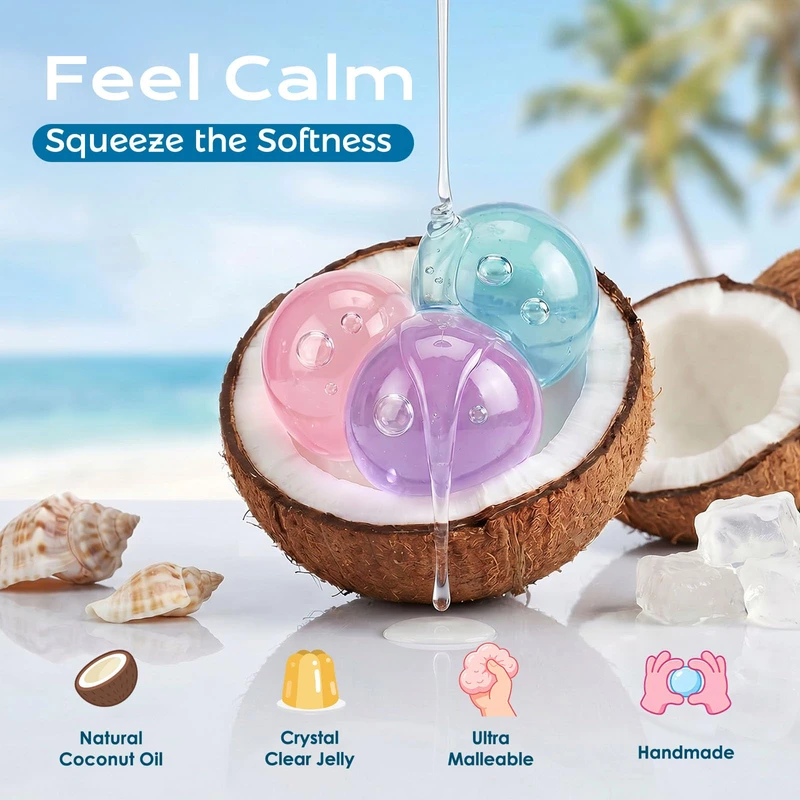
Not every product marketed with this name necessarily contains pure coconut oil. In manufacturing, the internal material may be a formulated filling system containing coconut oil or another oil-based component combined with additional ingredients to achieve the desired viscosity, texture, stability, and safety characteristics.
Compared with traditional foam stress balls, filled stress balls can provide a different sensory experience. Foam products compress the air-filled cellular structure of the material, while filled products allow the internal material to move as the shell is squeezed. This can create a softer, fluid-like or gel-like tactile sensation depending on the filling formulation.
How Do Coconut Oil Stress Balls Work
The sensory experience of a coconut oil stress ball is created through the interaction between the outer shell and internal filling.
When a user applies pressure to the product, the flexible shell deforms and the filling moves inside the enclosed cavity. Because the filling resists compression and displacement differently from solid foam, the user may experience a soft, fluid-like squeezing sensation.
A softer shell generally produces a more responsive squeezing experience, while a thicker or more rigid shell can create greater resistance. Similarly, a thicker filling may move more slowly, while a lower-viscosity filling may flow more easily during compression.
Are Coconut Oil Squishies Safe
The safety of a coconut oil squishy depends on the complete product construction, not simply on whether coconut oil is used as a filling ingredient. The outer shell, filling formulation, colorants, additives, seams, adhesives, and overall design all need to be evaluated according to the intended application and target market.
For products intended for children, safety considerations are particularly important. The manufacturer needs to consider applicable toy safety requirements in the target market, including relevant physical, mechanical, chemical, and material requirements. Depending on the market, standards and regulations may include ASTM F963, CPSIA, EN71, and applicable chemical restrictions such as RoHS.
Leakage resistance is another critical consideration for filled stress balls. The outer shell and sealing structure need to be designed to withstand repeated squeezing and normal handling without allowing the filling to escape. This makes material compatibility, sealing quality, and production consistency particularly important.
What Is the Best Filling for a Stress Ball
There is no single filling that is universally best for every stress ball. The appropriate filling depends on the desired texture, squeezing resistance, recovery behavior, product design, target market, shelf life, manufacturing process, and cost requirements.
Traditional stress balls may use PU foam, which provides a lightweight, soft, and slowly recovering texture. Foam is particularly suitable for products where consumers want to repeatedly compress the entire body of the stress ball.
Other filled sensory products may use gel, beads, liquid-like materials, or formulated compounds to create different tactile experiences. These materials can provide greater movement inside the product and produce sensations that differ from foam-based products.
For a coconut oil stress ball, the key issue is not simply whether coconut oil is present. The manufacturer needs to determine whether the complete filling formulation provides the required viscosity, stability, compatibility, and tactile response. Pure oil may not necessarily provide the ideal commercial product performance, so a properly engineered formulation may be more appropriate depending on the product requirements.
Why Are Coconut Oil Stress Balls Popular
One reason coconut oil stress balls attract attention is their distinctive sensory experience. Consumers are increasingly interested in products that offer tactile stimulation rather than simply serving as conventional toys. A soft shell combined with an internal filling can create a unique squeezing sensation that differs from standard foam products.
The product concept also benefits from the broader popularity of squishy toys and sensory products. Consumers are familiar with squeezing, stretching, and manipulating sensory toys, while brands continue to introduce new textures, shapes, and materials to differentiate their products.
For retailers, distinctive sensory products can also support impulse purchasing. Small stress balls are easy to display and package, making them suitable for gift shops, novelty stores, promotional campaigns, and other retail environments.
How to Custom Coconut Oil Stress Balls for Your Brand
Custom coconut oil stress balls require close cooperation between product design, material engineering, prototyping, manufacturing, and quality control. For brands, the most effective approach is to choose the outer material and filling before moving into detailed engineering.
The outer shell determines much of the product’s tactile response and durability. The selected material should be flexible enough to provide the intended squeezing experience while maintaining sufficient strength to withstand repeated handling. The filling should then be selected or formulated according to the desired texture and performance. If a coconut oil-based formulation is required, the manufacturer should evaluate its compatibility with the shell material and the complete product construction.
Once the design and materials are defined, the manufacturer can develop a production-ready model and prototype. A physical prototype is then particularly important because it allows the brand to evaluate the actual squeeze.
After the prototype is approved, production tooling can be developed. Mold design needs to account for the product’s shape, shell construction, manufacturing method, and sealing requirements. During production, the outer shell is formed and the filling is introduced according to the selected manufacturing process. The product is then sealed to create a closed internal structure.
Custom stress balls can be finished with different colors, patterns, logos, facial features, and other visual details. Depending on the design, manufacturers may use spray painting, pad printing, or other suitable techniques.
Quality control should cover both the appearance and physical performance of the product. For filled products, leakage and sealing performance are particularly important. Products may need to undergo appropriate durability or compression testing based on the intended use.
Packaging can be customized to support the brand’s visual identity and retail positioning. For retail products, packaging should protect the stress ball during transportation while clearly communicating the character, brand, product information, and any required warnings or instructions.
How to Choose a Reliable Stress Ball Manufacturer
Choosing the right manufacturer is particularly important for filled sensory products because production requires more than conventional plastic or foam processing. Brands should look for a supplier with experience in stress balls, squishy toys, sensory products, or other products involving flexible shells and specialized fillings.
A reliable manufacturer should be able to support the project from concept development and material selection through prototyping, tooling, production, printing, assembly, quality control, and packaging. An integrated manufacturing process can reduce communication gaps and make development more efficient.
Brands should also evaluate the manufacturer’s experience with safety and compliance requirements. This is especially important when the product is intended for children or international retail markets.
Production capacity and quality control should also be considered. Brands should evaluate the manufacturer’s ability to maintain consistency in dimensions, filling quantity, sealing, color, printing, and overall tactile performance.
Finally, communication is essential. Custom sensory products often require multiple sample revisions before the final specifications are approved. A manufacturer that can provide clear technical recommendations can significantly reduce development risks.
Why Partner with Weijun Toys for Custom Coconut Oil Stress Balls
With over 30 years of toy manufacturing experience, Weijun Toys provides professional OEM and ODM manufacturing services for brands developing custom stress balls, squishy toys, sensory products, and promotional merchandise.
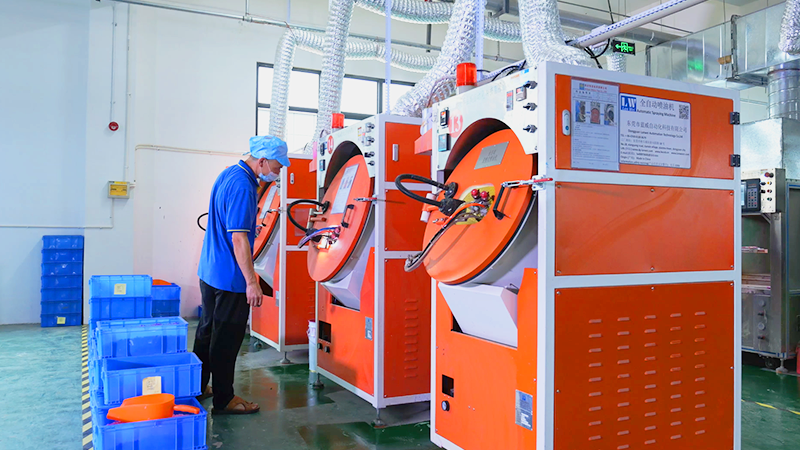
Weijun Toys can support customized shapes, sizes, colors, textures, character designs, branding, accessories, and packaging according to project requirements. For filled sensory products, material compatibility, product construction, and tactile performance can be evaluated during the development process to help achieve the desired result.
We also understand that different brands have different product positioning and production requirements. Whether you are developing a character-based sensory toy, a promotional stress ball, or a retail novelty product, the product can be developed according to your specifications for size, appearance, packaging, and branding.
For brands exploring coconut oil-based or other specialized filled stress ball concepts, Weijun Toys can help evaluate the product requirements and develop a manufacturing solution suitable for the intended market and production volume.
 2 Modern Factories 30 Years of Toy Manufacturing Expertise 200+ Cutting-Edge Machines Plus 3 Well-Equipped Testing Laboratories 560+ Skilled Workers, Engineers, Designers, and Marketing Professionals One-Stop Customization Solutions Quality Assurance: Able to Pass EN71-1,-2,-3 and More Tests Competitive Prices and On-Time Delivery










