
Custom badges have evolved far beyond simple name tags or promotional giveaways. Today, they are widely used by brands, retailers, event organizers, fashion companies, and licensing businesses as affordable yet highly effective marketing tools. Custom badges offer businesses a unique opportunity to increase brand visibility and engage customers in a memorable way.
The growing popularity of collectible culture, limited-edition merchandise, and experiential marketing has further fueled demand for customized badges. Brands are increasingly using them to create emotional connections with consumers while generating additional revenue streams through retail sales and promotional campaigns.
What Are Custom Badges
Custom badges are personalized wearable or collectible products manufactured with custom graphics, logos, slogans, characters, or promotional messages. Unlike generic buttons, custom badges are specifically designed to represent a brand identity, commemorate an event, promote a campaign, or serve as retail merchandise.
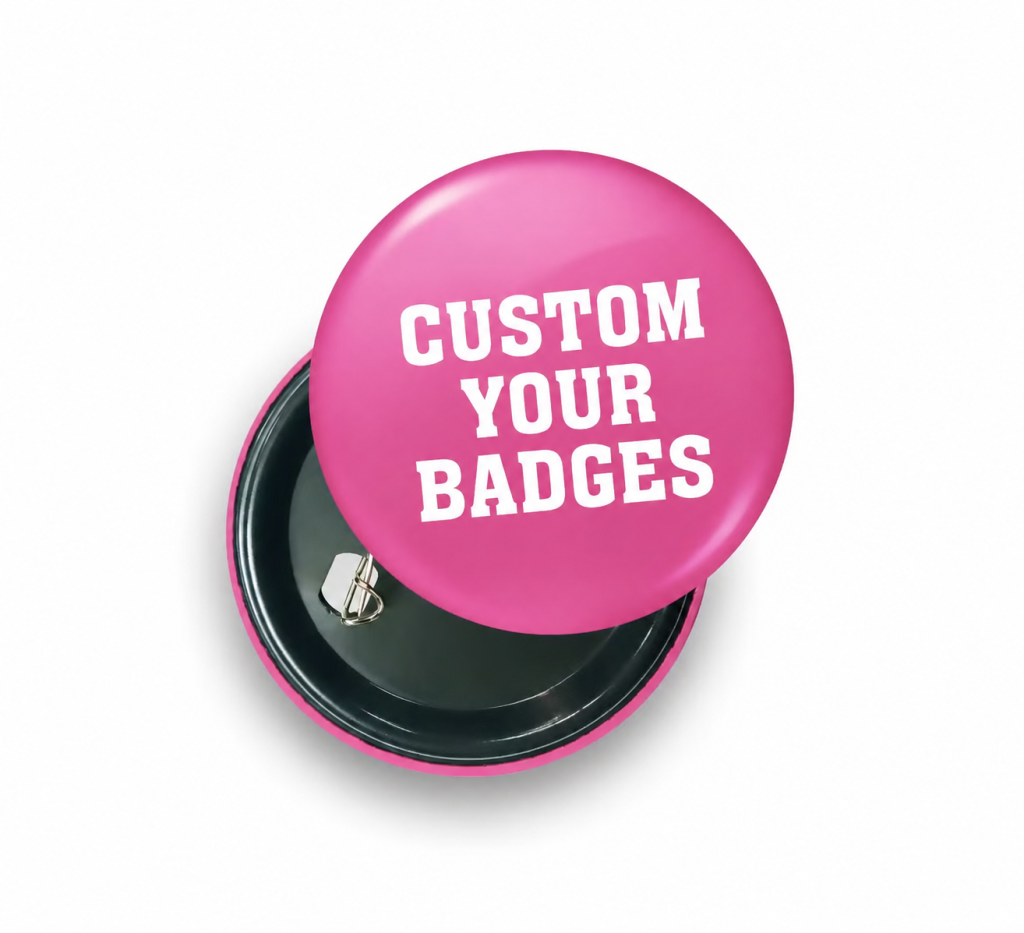
Modern badges are available in a wide variety of sizes, shapes, materials, and fastening options. The most common style is the metal pin-back button badge, which consists of a printed graphic protected by a transparent film and assembled with a metal shell and pin attachment.
For businesses, custom badges provide a compact and cost-effective medium for storytelling. A simple logo badge can reinforce brand awareness, while character badges, artist collaborations, and limited-edition collections can transform an inexpensive product into a highly collectible item that consumers actively seek out.
As consumer interest in personalization and collectibles continues to grow, custom badges have become valuable assets for both marketing campaigns and product merchandising strategies.
Why Custom Badges Are Valuable for Brands and Retailers
One of the biggest advantages of custom badges is their ability to deliver strong marketing impact at a relatively low production cost. Compared with apparel, bags, or electronic promotional products, badges require lower investment while offering high visibility and long-term exposure.
When customers wear a badge on clothing, backpacks, hats, or lanyards, they essentially become mobile advertisements for the brand. This organic visibility helps companies increase brand recognition without additional advertising expenses.
Custom badges are also highly effective tools for customer engagement. Limited-edition collections, seasonal releases, and event-exclusive badges encourage consumers to collect, trade, and share their purchases on social media platforms. This creates excitement around a brand while increasing customer retention and repeat purchases.
Retailers often use custom badges as impulse-buy products near checkout counters because of their affordable price points and attractive designs. Licensed entertainment brands frequently release badge collections featuring popular characters, movie franchises, sports teams, or gaming properties, turning simple accessories into highly profitable merchandise categories.
Popular Types of Custom Badges
The versatility of custom badges allows businesses to choose products that align with their branding goals and customer preferences.
Pin-back button badges remain the most widely used option due to their affordability and simple production process. They are commonly used for promotional campaigns, concerts, exhibitions, political events, schools, and retail merchandise.
Magnetic badges offer a premium alternative because they do not damage clothing fabrics. Many businesses use magnetic badges for employee identification, conferences, and professional events.
Bottle opener badges combine functionality with branding opportunities. These products are particularly popular within beverage, hospitality, and entertainment industries because customers continue using them long after the original promotion ends.
Mirror badges have become increasingly popular among cosmetic brands and lifestyle retailers. By combining decorative graphics with practical functionality, they appeal strongly to younger consumers.
Fridge magnet badges transform promotional products into household items that maintain constant visibility within customers’ homes.
Meanwhile, custom-shaped badges and specialty finishes such as holographic effects, glitter coatings, glow-in-the-dark printing, and lenticular graphics are becoming increasingly popular in collectible and blind-box markets.
How to Create Custom Badges for Your Brand
Creating successful custom badges begins with understanding the purpose behind the project. Some businesses prioritize promotional exposure, while others focus on retail sales or customer engagement. Clearly defining objectives helps determine the appropriate design, size, and production specifications.
The next stage involves selecting the badge dimensions and shape. Standard round sizes such as 25mm, 32mm, 44mm, 58mm, and 75mm are widely used because they are cost-efficient and compatible with automated production equipment. However, custom shapes and oversized formats can provide stronger visual impact for premium products.
Artwork preparation is one of the most critical steps in badge development. High-resolution vector files ensure accurate printing and color consistency throughout production. Businesses should consider readability, contrast, logo placement, and brand identity guidelines when developing badge designs.
Material and finishing options also influence the final appearance and customer perception of the product. Glossy finishes offer vibrant colors and strong visual appeal, while matte finishes provide a premium and sophisticated look. Special effects such as holographic films, metallic foils, UV coatings, and glitter laminations can further enhance product differentiation.
The selection of backing systems depends on intended usage scenarios. Traditional safety pins remain the industry standard for promotional products, while magnets, clips, mirrors, bottle openers, and refrigerator magnets provide additional functional value.
Before mass production begins, manufacturers typically provide pre-production samples for approval. This stage allows customers to verify artwork positioning, color accuracy, material quality, and assembly standards before committing to large production quantities.
How Custom Badges Are Manufactured
The manufacturing process plays a crucial role in determining the appearance, durability, and overall quality of custom badges. Although badge production may seem straightforward from the outside, modern manufacturing involves multiple specialized stages that require precision equipment and strict quality control procedures.
The process begins with artwork preparation and prepress engineering. Designers first convert customer artwork into production-ready files, ensuring dimensions, bleed areas, color profiles, and cutting specifications meet manufacturing requirements. Any errors during this stage can lead to alignment issues or printing defects later in production, making technical review extremely important.
Once the artwork is approved, the design moves into the printing stage. Depending on production volume and design complexity, manufacturers may use offset printing, digital printing, or UV printing technologies. Offset printing remains the preferred method for large-volume orders because it delivers excellent color consistency and sharp image reproduction while maintaining cost efficiency.
After printing, the artwork sheets are laminated with a transparent protective film. This layer serves multiple purposes: it protects the printed graphics from scratches, moisture, and UV exposure while also enhancing visual appeal through glossy, matte, holographic, or specialty finishes. The quality of the protective film significantly influences the durability and premium appearance of the final product.
The printed and laminated sheets then enter the cutting process, where circular or custom-shaped dies punch individual graphics from larger sheets with extremely high precision. Accurate cutting ensures perfect alignment during the assembly stage and prevents uneven borders or image distortion.
At the same time, metal shells and backing components are manufactured separately. Most button badges use tinplate steel or aluminum materials because they provide excellent strength, corrosion resistance, and dimensional stability. The front shell is shaped through metal stamping equipment, while pin backs, magnets, bottle openers, or mirror components are prepared according to customer specifications.
The assembly stage represents one of the most important steps in badge manufacturing. Using automated badge pressing machines, manufacturers combine the metal shell, printed artwork, protective film, and backing component into a single finished product under carefully controlled pressure settings. Improper pressure can lead to wrinkles, loose components, or poor edge sealing, directly affecting product quality and customer satisfaction.
Following assembly, every badge undergoes quality inspection procedures. Inspectors evaluate print quality, color consistency, alignment accuracy, pin functionality, edge smoothness, and structural integrity. Random sampling tests may also be conducted to assess durability, scratch resistance, and fastening performance.
For export markets, manufacturers must ensure compliance with international safety standards and regulations. Depending on destination markets, products may need to comply with requirements such as EN71, ASTM F963, CPSIA, or REACH regulations. Compliance testing is particularly important for badges intended for children’s products, promotional toys, or licensed merchandise.
Packaging is the final stage of production. Individual polybags, backing cards, retail blister packs, display boxes, and gift packaging solutions can all be customized according to branding requirements. Proper packaging protects products during international transportation while enhancing retail presentation and perceived value.
Ultimately, the manufacturing expertise of the supplier determines whether a badge simply functions as a promotional item or becomes a premium branded product that customers proudly collect and display.
Industries and Applications for Custom Badges
Custom badges are used across a wide range of industries because they combine affordability, portability, and strong visual appeal.
Retail brands often sell badge collections as impulse-purchase accessories or bundled merchandise items. Fashion companies use badges to complement apparel collections and seasonal product launches.
Entertainment and licensing companies frequently release badges featuring movie characters, animation franchises, musicians, and gaming properties to capitalize on fan communities and collectible markets.
Trade shows and exhibitions rely heavily on badges for branding, visitor engagement, and promotional giveaways. Corporate organizations use badges for employee recognition programs, company anniversaries, and internal events.
Educational institutions distribute badges for school clubs, graduation ceremonies, and fundraising initiatives, while sports organizations produce commemorative badges for tournaments, teams, and fan events.
Political campaigns and nonprofit organizations also utilize badges to communicate messages, raise awareness, and encourage community participation.
How to Choose a Reliable Custom Badge Manufacturer
Selecting the right manufacturing partner is one of the most important decisions for brands and retailers.
Experience should be a primary consideration. Suppliers with years of manufacturing expertise typically have stronger capabilities in design optimization, production management, and quality control.
Production capacity is equally important, particularly for businesses operating seasonal promotions or large-scale campaigns. Manufacturers with automated production equipment and flexible assembly lines are better positioned to meet tight deadlines and sudden demand increases.
Customization capabilities should extend beyond simple logo printing. A strong supplier should offer multiple badge sizes, specialty finishes, backing options, packaging solutions, and private-label services.
International buyers should also evaluate compliance certifications and export experience. Familiarity with global regulations and shipping requirements reduces risks and simplifies procurement processes.
Finally, communication efficiency, sampling speed, and project management support often determine whether a partnership becomes successful over the long term.
Why Choose Weijun Toys as Your Custom Badge Manufacturer
With over 30 years of manufacturing experience, Weijun Toys provides comprehensive OEM and ODM solutions for brands, retailers, distributors, and promotional merchandise companies worldwide. From artwork development and prototype creation to mass production, packaging, and global logistics support, our experienced team provides complete end-to-end project management services.
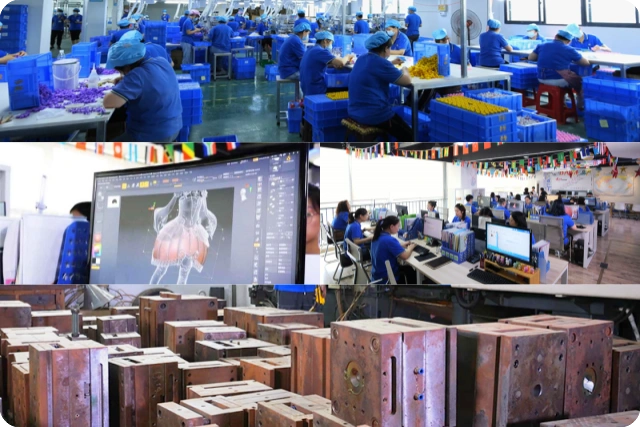
We offer flexible customization options including multiple badge sizes, specialty finishes, magnetic backings, bottle opener designs, retail packaging, and private-label branding solutions to help customers create products that stand out in competitive markets.
Whether you require promotional giveaways, collectible merchandise, event souvenirs, or retail-ready products, Weijun Toys is committed to delivering reliable quality, competitive pricing, and on-time delivery for every order.
 2 Modern Factories 30 Years of Toy Manufacturing Expertise 200+ Cutting-Edge Machines Plus 3 Well-Equipped Testing Laboratories 560+ Skilled Workers, Engineers, Designers, and Marketing Professionals One-Stop Customization Solutions Quality Assurance: Able to Pass EN71-1,-2,-3 and More Tests Competitive Prices and On-Time Delivery










