
Plush Christmas ornaments are a popular seasonal product that combines the softness and charm of plush toys with the decorative appeal of traditional Christmas ornaments. From Santa Claus and snowmen to reindeer, Christmas trees, gingerbread characters, and original brand mascots, plush ornaments can add a playful and cozy touch to Christmas trees, gift boxes, holiday displays, and seasonal collections.
What Are Plush Ornaments
Plush ornaments are soft decorative products made primarily from textile materials and designed to be displayed as Christmas or seasonal ornaments. Most plush ornaments include a hanging loop, ribbon, or string so they can be attached to Christmas trees, wreaths, gift packages, doors, shelves, or other holiday displays.
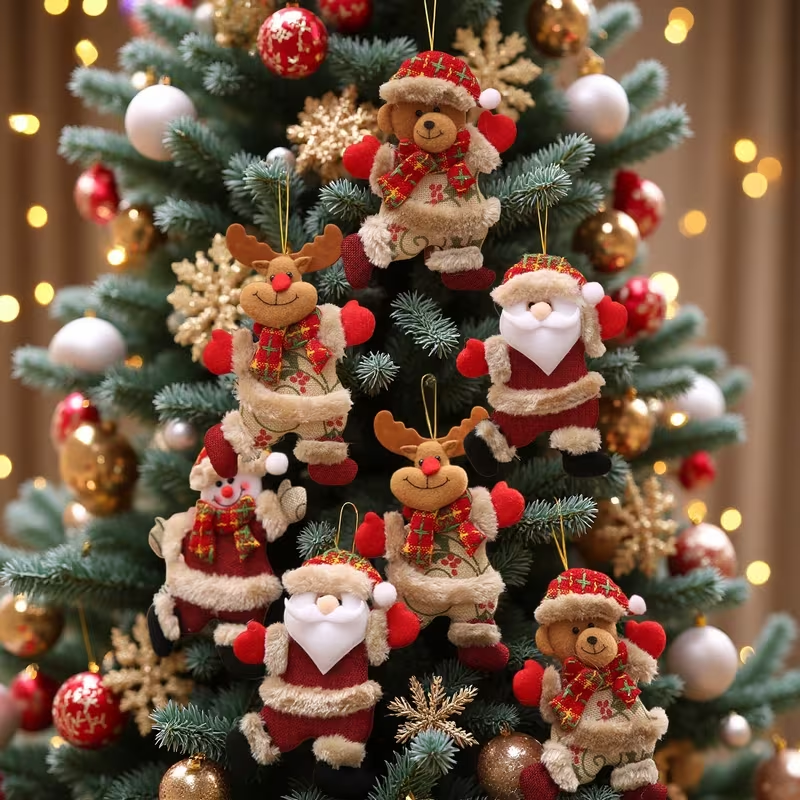
Unlike traditional glass, ceramic, wood, or plastic ornaments, plush ornaments have a soft and lightweight construction. Their fabric surfaces can also create a warmer and more playful visual effect, making them particularly suitable for family-oriented Christmas collections and children’s holiday products.
Traditional Christmas characters such as Santa Claus, snowmen, reindeer, elves, Christmas trees, candy canes, stockings, and gingerbread men remain popular choices. Plush Christmas ornaments can also be sold through multiple retail channels. They are commonly found in gift stores, Christmas shops, home décor stores, department stores, toy stores, online marketplaces, and seasonal pop-up stores. Smaller plush ornaments can additionally be used as stocking stuffers, gift accessories, promotional giveaways, or collectible merchandise.
What Materials Are Used for Plush Christmas Ornaments
Material selection has a significant impact on the appearance, softness, durability, cost, and overall quality of a plush Christmas ornament.
Plush Fabrics
Common outer fabrics include polyester, plush, Minky, and Velboa. Polyester-based fabrics are widely used because they are durable, versatile, and available in many colors and textures. Minky offers a particularly soft and smooth surface, making it suitable for cute and premium-looking plush characters. Velboa can provide a short, dense pile that works well for animal characters and other detailed designs.
The choice of fabric should match the visual style of the product. For example, a fluffy Christmas character may benefit from a longer or softer pile, while a small embroidered ornament may look cleaner with a shorter fabric surface.
Filling Materials
Polyester fiberfill or PP cotton is commonly used as the stuffing inside plush ornaments. It provides the soft and lightweight structure needed for the product while helping the ornament maintain its shape.
For brands with sustainability goals, recycled polyester fiber can also be considered where appropriate. Material selection should be discussed with the manufacturer early in the development process because the filling affects the final softness, firmness, weight, and production cost.
Embroidery, Printing, and Decorative Materials
Many plush Christmas ornaments use embroidery for facial features, Christmas patterns, logos, names, or other decorative details. Embroidery is especially useful for small plush products because it can create clear details without adding separate hard components.
Printing can be used for more complex patterns, while felt, ribbons, faux fur, fabric appliqués, buttons, bows, and other decorative components can add visual interest. However, components should be selected according to the product’s target age group and applicable safety requirements.
For products intended for young children, manufacturers should pay particular attention to small parts, attachment strength, fabric safety, stuffing, and other relevant requirements.
How to Custom Plush Christmas Ornaments
Customizing plush Christmas ornaments usually begins with a concept or design and continues through sampling, material selection, production, quality control, and packaging. Working with an experienced manufacturer can help buyers turn an initial idea or artwork into a production-ready plush ornament.
Start With the Design Concept
The first step is to determine what the ornament should look like and who it is intended for. Retailers may provide their own character artwork, sketches, reference images, logos, or existing product designs. Manufacturers with ODM capabilities can also help develop a concept when the buyer only has a general idea.
At this stage, important specifications include the character or shape, dimensions, colors, facial expression, decorative elements, hanging method, and overall style.
Select Fabrics and Materials
Once the design is established, the manufacturer can recommend appropriate fabrics, filling, accessories, embroidery techniques, and other materials. Material selection should consider both appearance and production practicality.
For plush Christmas ornaments, softness and visual appeal are usually important because the products are often displayed close to customers. However, the material should also be durable enough to withstand production, packaging, transportation, and retail handling.
Develop and Approve a Sample
A sample allows the buyer to evaluate the actual product before mass production. This stage is particularly important for plush ornaments because the appearance of a fabric product can differ from a two-dimensional drawing.
The sample should be checked for proportions, shape, colors, fabric texture, embroidery, stuffing, accessories, hanging loops, and overall workmanship. If changes are needed, the manufacturer can modify the sample before production.
For custom products, approving the final sample is an important milestone because it establishes the reference standard for bulk production.
Confirm Packaging and Branding
Packaging is another important part of customization. Retailers can choose from individual polybags, paper tags, gift boxes, printed packaging, display packaging, or customized retail sets depending on their sales channel.
A branded hangtag can include the company logo, product name, Christmas message, barcode, care instructions, or other information. For retail products, packaging can also help create a consistent visual identity across an entire holiday collection.
Move to Mass Production
After the sample, materials, specifications, packaging, and quality standards are confirmed, the manufacturer can proceed with mass production. Professional plush factories typically organize cutting, sewing, embroidery, stuffing, assembly, trimming, inspection, and packing through a structured production process.
Quality control should take place throughout production rather than only at the final stage. This helps identify problems early and maintain consistency across larger orders.
Key Factors to Consider When Sourcing Plush Christmas Ornaments Wholesale
Wholesale plush Christmas ornaments require careful planning because Christmas products are highly seasonal. Retailers need to balance product variety, order quantities, pricing, production time, and delivery schedules.
The first consideration is the product range. Instead of ordering many unrelated designs, retailers can create a coordinated Christmas collection. Order quantity is another important consideration. The right wholesale quantity depends on the retailer’s sales channels, expected demand, available storage space, product price, and previous seasonal sales.
MOQ is therefore an important point to discuss with the manufacturer. Some factories may offer different MOQs depending on the design, material, number of colors, packaging requirements, and production process. Buyers should confirm whether the MOQ applies per design or to the total order.
Pricing should also be evaluated beyond the quoted unit cost. The total purchasing cost may include sampling, tooling or development charges where applicable, customized packaging, inspection, shipping, and other expenses. Comparing suppliers based only on the lowest unit price can sometimes lead to unexpected costs later in the process.
Lead time is particularly important for Christmas products. Retailers need to allow enough time for design confirmation, sample development, revisions, bulk production, quality inspection, packaging, and transportation. It is generally safer to begin sourcing and product development well before the holiday selling season rather than waiting until demand is already high.
Retailers should also consider product safety and compliance. Depending on the target market and intended age group, plush Christmas ornaments may need to meet applicable toy or consumer-product requirements. A qualified manufacturer should be able to discuss relevant testing and compliance considerations during product development.
How to Choose a Reliable Plush Christmas Ornament Manufacturer
Choosing the right manufacturer can have a direct impact on product quality, delivery reliability, and the overall success of a seasonal collection. Retailers should look beyond product photos and compare suppliers based on manufacturing experience, customization capabilities, quality control, communication, and production capacity.
Experience is an important starting point. A manufacturer with extensive plush production experience is more likely to understand fabric selection, sewing construction, embroidery, stuffing, trimming, and the challenges involved in producing small and detailed plush ornaments.
Customization capability is equally important. If a retailer wants original characters, custom colors, special fabrics, embroidered logos, unique accessories, or customized packaging, the manufacturer should have the appropriate design and production capabilities rather than simply offering ready-made products.
Sample quality should also be carefully evaluated. A good sample can reveal the manufacturer’s attention to detail, including stitching quality, proportions, embroidery accuracy, fabric selection, stuffing consistency, and finishing.
Quality control and testing should not be overlooked. Retailers should ask how the manufacturer controls materials and workmanship during production and what testing or inspection procedures are available for the target market.
Finally, communication and delivery capability matter greatly for seasonal products. A reliable manufacturer should provide clear information about MOQ, sampling, production schedules, packaging, shipping, and quality standards. Transparent communication helps buyers plan inventory and avoid last-minute surprises.
Why Choose Weijun Toys for Custom Plush Christmas Ornaments
Weijun Toys is a professional toy manufacturer with more than 30 years of manufacturing experience, offering OEM and ODM services for global brands, retailers, wholesalers, distributors, and promotional product companies. We provides customized plush manufacturing from concept and design development to prototyping, mass production, packaging, and delivery. Customers can provide their own artwork, character concepts, specifications, or reference designs, while Weijun’s experienced teams can help develop them into production-ready plush products.
For custom Christmas ornaments, we can support different plush designs, sizes, fabrics, colors, embroidery, decorative elements, hanging accessories, labels, and packaging requirements. This allows retailers to create Christmas collections that match their brand identity and target customers rather than relying solely on standard seasonal designs.
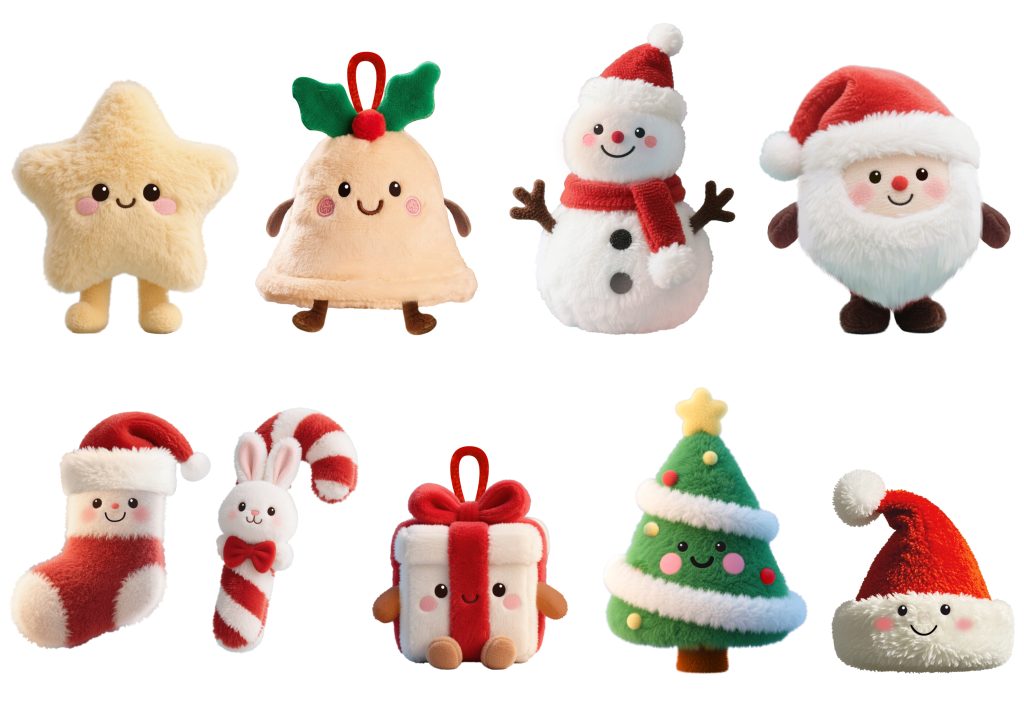
Weijun Toys also has broad experience across different toy categories, including plush toys, vinyl plush, plush keychains, PVC toys, collectible figures, blind box products, and other customized promotional products. This broader manufacturing capability can be useful for retailers planning coordinated holiday collections that combine plush ornaments with other seasonal merchandise.
For retailers looking for a long-term manufacturing partner, Weijun Toys focuses on providing flexible OEM and ODM solutions rather than simply supplying standard products. From an original Christmas character to a finished retail-ready ornament, the goal is to help customers move efficiently from idea to shelf.
 2 Modern Factories 30 Years of Toy Manufacturing Expertise 200+ Cutting-Edge Machines Plus 3 Well-Equipped Testing Laboratories 560+ Skilled Workers, Engineers, Designers, and Marketing Professionals One-Stop Customization Solutions Quality Assurance: Able to Pass EN71-1,-2,-3 and More Tests Competitive Prices and On-Time Delivery










