
Jesus toy figurines can be more than decorative religious products. For retailers, wholesalers, gift shops, Christian bookstores, church stores, and specialty retailers, they can become distinctive products for religious gifting, seasonal merchandising, collectibles, educational use, and faith-based promotions.
For businesses planning to develop their own Jesus toy figurines, customization offers greater flexibility than purchasing standard products. Retailers can choose the character style, size, material, colors, packaging, and production quantity to create products that fit their target market.
Why Custom Jesus Figures for Retail Business
Custom Jesus figures can help retailers develop products that are better aligned with their specific customers and sales channels. Instead of relying entirely on generic figurines available from multiple suppliers, businesses can create their own designs with distinctive poses, proportions, colors, accessories, and packaging.
For religious gift shops and Christian bookstores, for example, a classic Jesus figure may be appropriate for customers looking for traditional religious gifts. A smaller, simplified, or cartoon-style figure may appeal to customers purchasing gifts for children or families. Retailers can also develop different sizes and price points to serve both impulse purchases and higher-value gift products.
Customization also provides opportunities for seasonal merchandising. Jesus figurines can be incorporated into Christmas collections, Nativity-themed products, Easter merchandise, church event giveaways, educational products, or special gift sets. By changing the packaging, accessories, or presentation while maintaining a consistent character style, retailers can build a broader product collection around the same concept.
How to Custom Jesus Toy Figurines for Retail Business
Step 1: Define Your Target Market and Product Concept
Before developing the figure, clearly define who will purchase it and how the product will be sold. Your target market may include religious gift shops, Christian bookstores, church stores, specialty retailers, educational organizations, or general gift retailers.
The target customer directly affects the product’s appearance, size, material, packaging, and price. For example, a collectible product for adult customers may require more detailed sculpting and premium packaging, while a small retail toy may prioritize durability, simple details, and cost efficiency.
At this stage, determine the basic product concept, including the character’s appearance, pose, approximate size, intended age group, retail price range, sales channel, and expected order quantity. It is also important to consider whether the figure will be sold individually or as part of a collection, gift set, display set, or seasonal assortment.
Step 2: Create the Jesus Figurine Design
Once the concept is established, the next step is to develop the figurine design. Depending on your resources, you can provide your own artwork, reference images, sketches, or 3D files, or work with a manufacturer’s in-house design and engineering team.
The design should define important visual elements such as the pose, facial expression, hairstyle, clothing, proportions, accessories, and overall style. For example, a retailer may choose a traditional realistic appearance, a simplified cartoon style, or a cute collectible aesthetic.
Step 3: Choose Materials, Size, and Production Method
Material selection has a direct impact on the figurine’s appearance, durability, production cost, and retail positioning. Common options include PVC, vinyl, ABS, and resin, although the most suitable choice depends on the design and intended application.
PVC is widely used for mass-produced toy figurines because it offers a good balance between durability, detail, and cost. Vinyl is also popular for collectible figures and products that require a smooth surface and distinctive visual finish. ABS can be useful when a harder and more rigid structure is required, while resin is often considered for highly detailed or smaller-batch premium products.
Size should also be determined at this stage. Mini figures can work well for impulse purchases, gift sets, promotional products, and compact retail displays, while larger figures can create stronger shelf presence and support higher retail prices.
Step 4: Develop and Approve the Prototype
The prototype is one of the most important stages of custom figurine development. It provides an opportunity to evaluate the actual three-dimensional product before committing to mass production.
After reviewing the design, the manufacturer can create a prototype or 3D sample to check the overall proportions, pose, structure, facial details, clothing, accessories, and other design elements. This stage allows the buyer and manufacturer to identify problems that may not be obvious in a two-dimensional drawing.
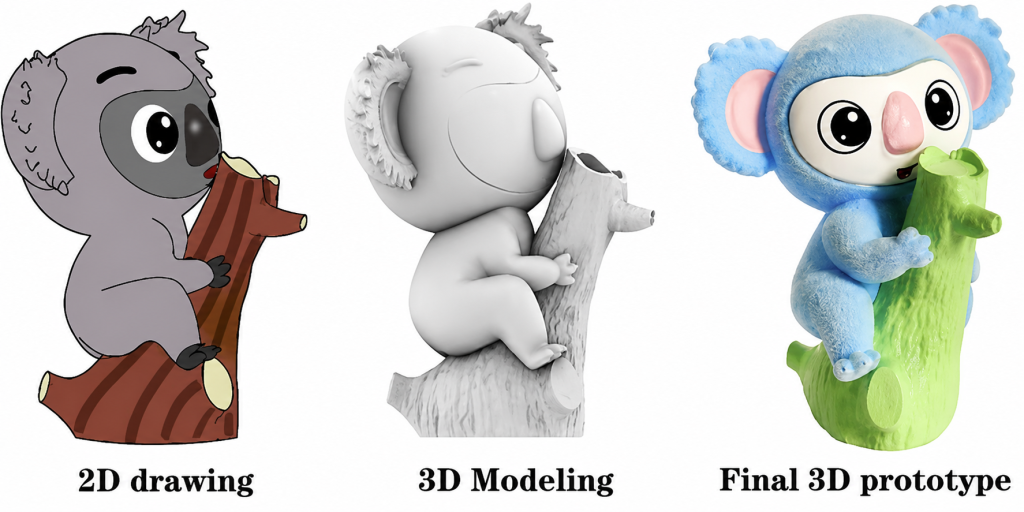
Retailers should carefully inspect the sample and compare it with the approved design specifications. Pay particular attention to dimensions, sculpting details, stability, surface quality, and the overall appearance of the figure. If changes are required, they should be completed and approved before mass production begins. A properly approved pre-production sample becomes an important reference for subsequent manufacturing and quality control.
Step 5: Customize Colors, Painting, and Details
Once the structure and prototype are approved, the visual finishing process can be finalized. Color matching is particularly important when the figurine is part of a branded product collection. Retailers should provide clear color references whenever precise color reproduction is required.
Depending on the design, manufacturers may use spray painting, pad printing, or other finishing techniques to create clothing colors, facial features, patterns, logos, and decorative details. Small details can significantly influence the perceived quality of a figurine, so consistency between samples and mass-produced products is essential.
The buyer should also confirm the desired finish, such as matte, glossy, metallic, or other surface effects. If the product includes multiple colors or complex painted details, it is advisable to establish clear production standards during sample approval.
Step 6: Mass Production and Quality Control
After the final sample is approved, the manufacturer can proceed with tooling preparation and mass production. Depending on the product, the manufacturing process may include molding, trimming, surface preparation, painting, pad printing, assembly, inspection, and packaging.
Quality control should take place throughout the production process rather than only at the end. Manufacturers should monitor dimensions, colors, paint application, printing accuracy, assembly, surface defects, and packaging condition.
For children’s products, safety requirements are particularly important. Depending on the target market and product classification, applicable standards may include requirements such as ASTM F963, CPSIA, EN71, and CE-related requirements. Buyers should discuss testing and compliance requirements with their manufacturer before production so that the appropriate materials, processes, and testing procedures can be arranged in advance.
Materials and Manufacturing Options for Custom Jesus Figurines
The right material depends on the product’s intended market, design complexity, expected quantity, and budget. There is no single material that is ideal for every Jesus toy figurine project.
PVC is one of the most practical choices for custom figurines. It provides good durability and allows manufacturers to reproduce a wide range of character shapes and details. It is particularly suitable for retailers looking for affordable products for larger-volume orders.
Vinyl is commonly associated with collectible figures because of its smooth appearance and distinctive feel. It can be a suitable option when the product is positioned more as a collectible or designer-style figure rather than a conventional children’s toy.
ABS provides a relatively hard and rigid structure and can be useful for designs requiring greater structural strength. It may also be combined with other materials in more complicated figure designs.
Resin can reproduce fine sculptural details and is often considered for premium figures, prototypes, or limited editions. However, the production economics and physical characteristics may make it less suitable for high-volume mass-market products.
In addition to material, manufacturers need to consider the production method. Injection molding is highly suitable for consistent, repeatable mass production and can help control unit costs at larger quantities. For this reason, retailers should not select materials and manufacturing methods based solely on price. A reliable manufacturer should evaluate the entire project and recommend a solution that balances appearance, durability, production efficiency, and target retail price.
How to Choose a Reliable Toy Figurine Manufacturer
Choosing the right manufacturer can have a significant impact on the final quality, cost, and delivery schedule of custom Jesus toy figurines. A supplier may offer a competitive quotation, but price alone does not demonstrate whether the factory has the technical capability to successfully produce the product.
First, consider the manufacturer’s experience with custom figurines. A factory with established experience in PVC, vinyl, ABS, or other toy manufacturing processes will generally be better prepared to identify production problems during the design and prototyping stages.
Second, evaluate the manufacturer’s OEM and ODM capabilities. OEM production is suitable when you already have your own design and specifications, while ODM services are useful when you need support with product development, engineering, prototyping, or design optimization.
Production capabilities are another important consideration. Buyers should understand whether the supplier has its own molding, painting, printing, assembly, inspection, and packaging facilities. An integrated production process can make communication easier and provide better control over quality and lead time.
Quality management should also be examined carefully. Ask about material inspection, production-line QC, finished-product inspection, product testing, and how the factory handles defects or revisions. If your products are intended for children or major international markets, confirm that the manufacturer understands the relevant safety and testing requirements.
Finally, consider practical factors such as MOQ, sample development, production lead time, packaging customization, shipping experience, communication, and after-sales support. A reliable manufacturer should be able to provide clear information before you place a bulk order rather than leaving important production details uncertain.
Tips for Ordering Custom Jesus Figurines in Bulk
Before placing a bulk order, make sure all key product specifications have been confirmed. This should include the figurine dimensions, material, colors, artwork, finishing requirements, packaging, quantity, and applicable testing requirements.
MOQ is another important consideration. Tooling and setup costs mean that custom products often have different economics from standard off-the-shelf products. Ask the manufacturer about its MOQ and whether different designs can be combined within an order when appropriate.
Sample approval should always be completed before mass production. The approved sample can serve as a physical quality reference for production, especially for color, painting, dimensions, and appearance.
Packaging should also be considered early rather than added at the end of the project. Retail packaging can affect both product protection and shelf appeal. Depending on the sales channel, you may need individual boxes, blister packaging, window boxes, gift packaging, or larger retail display cartons.
Lead time should include the complete development process, not just factory production. Tooling, prototyping, sample approval, production, inspection, packaging, and shipping can all affect the final delivery date. If the products are intended for Christmas, Easter, church events, or another seasonal sales period, allow sufficient time for development and transportation.
Most importantly, communicate your requirements clearly. Providing detailed artwork, dimensions, reference images, packaging specifications, and quality expectations at the beginning can significantly reduce misunderstandings and unnecessary revisions.
Why Choose Weijun Toys for Custom Jesus Toy Figurines
For retailers looking for an experienced partner for custom Jesus toy figurines, Weijun Toys provides OEM and ODM manufacturing solutions from initial concept through mass production.
With 30+ years of toy manufacturing experience, Weijun Toys works with global brands, retailers, distributors, and other businesses to develop customized toy products. Its capabilities cover PVC toys, vinyl toys, ABS figures, plush toys, action figures, blind box collectibles, keychains, capsule toys, and other customized promotional products.
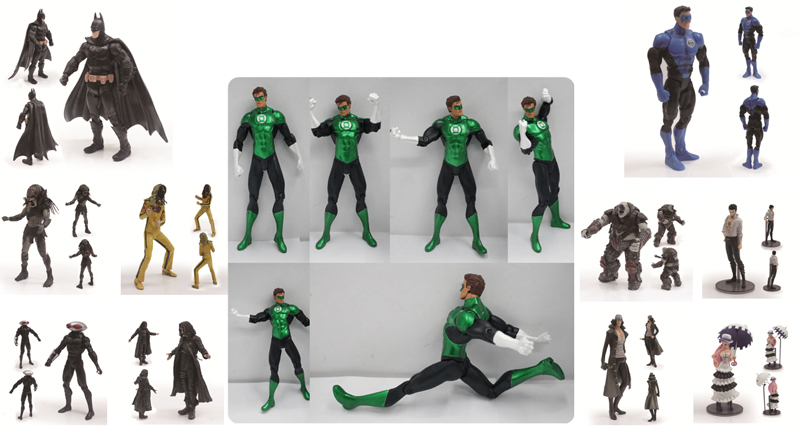
For a custom Jesus figurine project, Weijun Toys can support the development process from design and engineering to prototyping, molding, painting, assembly, quality control, and customized packaging. This integrated approach allows customers to work with one manufacturing partner instead of coordinating multiple suppliers for different production stages.
Whether you already have a finished Jesus figurine design or only have an initial product concept, we can help evaluate the design and determine a practical production solution. You can also discuss material selection, figure size, colors, packaging, MOQ, and other specifications before moving into mass production.
 2 Modern Factories 30 Years of Toy Manufacturing Expertise 200+ Cutting-Edge Machines Plus 3 Well-Equipped Testing Laboratories 560+ Skilled Workers, Engineers, Designers, and Marketing Professionals One-Stop Customization Solutions Quality Assurance: Able to Pass EN71-1,-2,-3 and More Tests Competitive Prices and On-Time Delivery










