
Businesses are constantly searching for promotional products that are affordable, memorable, and capable of generating long-term brand exposure. Among the most successful promotional giveaways, custom PU foam stress balls remain one of the most popular choices for trade shows, exhibitions, product launches, healthcare campaigns, educational events, and corporate marketing programs.
Unlike brochures or disposable promotional materials that are often discarded after a single use, stress balls remain visible on office desks, reception counters, and home workspaces for extended periods, creating repeated brand impressions. More importantly, advancements in polyurethane foaming technology have transformed the traditional round stress ball into a highly customizable promotional product.
What Is a PU Foam Stress Ball
A PU foam stress ball is a squeezable product manufactured from polyurethane foam, a lightweight cellular material created through a chemical reaction between polyol and isocyanate components. When compressed by hand, the foam temporarily deforms before gradually returning to its original shape due to its elastic memory properties.
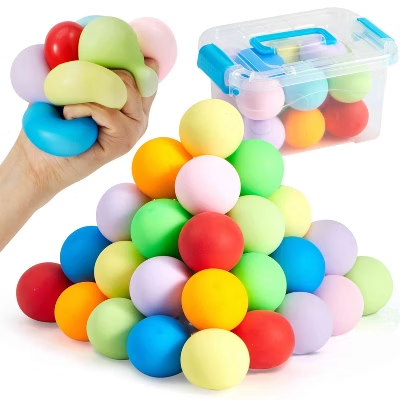
Although commonly referred to as “stress balls,” these products are no longer limited to spherical designs. Modern production technologies allow manufacturers to create custom three-dimensional promotional products in highly detailed shapes while maintaining the soft tactile feel and rebound performance that users expect from a stress-relief toy.
Compared with rubber stress balls, gel-filled products, or thermoplastic elastomer alternatives, PU foam stress balls offer superior design flexibility and a more comfortable squeezing experience. Their soft-touch surface and slow recovery characteristics make them particularly attractive as desktop promotional products and corporate giveaways.
Are PU Foam Stress Balls Safe
Safety compliance is a major concern for importers, distributors, and promotional product buyers, especially when products may be distributed internationally or come into contact with children.
High-quality PU foam stress balls manufactured by professional factories are generally safe for handling and repeated squeezing when produced using compliant raw materials and controlled production processes. For products entering European markets, compliance with EN71 standards and REACH regulations is commonly required. Products sold in the United States may require ASTM F963 compliance and CPSIA testing depending on the intended user group and distribution channel.
Most promotional PU stress balls are designed primarily as advertising products and office desk accessories rather than chewing toys or infant products. Manufacturers generally recommend usage by children above three years of age and advise against mouthing or biting the products.
Characteristics of PU Foam Stress Balls
The popularity of PU foam stress balls as promotional gifts is largely due to the unique physical characteristics of polyurethane foam materials.
One of the most attractive features is their excellent compressibility and recovery performance. The cellular structure inside the foam allows the product to deform significantly under pressure while retaining the ability to recover its original shape after repeated use. Depending on formulation adjustments, manufacturers can create either fast-rebound or slow-rise products to meet different market preferences.
Another major advantage is their extremely lightweight construction. The low-density foam structure keeps shipping costs low and makes large-volume promotional campaigns economically attractive, particularly for international distribution.
The material also accepts surface coatings and printing extremely well. High-quality paint finishes, Pantone color matching, pad printing, and detailed branding graphics can all be achieved with excellent visual results.
These characteristics combine to make PU foam one of the most versatile materials available in the promotional products industry.
Benefits of Custom PU Foam Stress Balls
Custom PU foam stress balls provide businesses with a highly efficient marketing tool that continues delivering advertising value long after an event or campaign has ended.
One of the primary advantages is prolonged brand exposure. Unlike leaflets or brochures that are quickly discarded, stress balls often remain on desks and workstations for months or years. Every interaction with the product reinforces brand recognition and improves recall among customers and employees.
Another significant advantage is customer engagement. Promotional products that encourage physical interaction generally create stronger emotional connections than passive advertising materials. The act of squeezing, holding, and using a stress ball creates repeated tactile engagement with the brand itself.
Custom shapes further increase promotional effectiveness. A stress ball designed to resemble a company’s product, logo, mascot, or industry-related object creates stronger memorability and differentiates the brand from competitors using standard promotional merchandise.
The Manufacturing Process of PU Foam Stress Balls
The production of PU foam stress balls is significantly more complex than many buyers realize.
Mold Preparation
The manufacturing process begins with mold preparation. Custom-made aluminum or high-strength resin molds are carefully cleaned and treated to remove any dust, residue, or contaminants that could affect the surface finish of the final product. A silicone-based release agent is then evenly sprayed onto the mold cavity to prevent the polyurethane foam from adhering to the mold during expansion and curing.
For products requiring a colored exterior or special visual effects, manufacturers may apply an in-mold coating or pre-spray a color layer inside the mold before filling. This technique helps achieve a smoother surface finish and more uniform color distribution on the finished stress ball.
Mixing & Injection
The core raw materials used for PU stress balls typically consist of liquid polymer polyols and modified MDI (Methylene Diphenyl Diisocyanate). These components are precisely measured and pumped into a high-speed mixing head where they are blended within seconds to initiate the chemical reaction.
Because polyurethane begins reacting immediately after mixing, the liquid mixture must be injected into the preheated mold cavities without delay. Accurate material ratios and timing during this stage are critical, as they directly influence the product’s density, softness, rebound characteristics, and overall consistency.
Rotation & Foaming
Immediately after injection, the molds are sealed and continuously rotated, usually across six directions, for approximately 10 to 15 seconds. This multi-axis rotation allows the reactive liquid to flow evenly across every surface and intricate detail within the mold cavity before foaming accelerates. As the chemical reaction progresses, gas is generated inside the material, creating the characteristic cellular structure of polyurethane foam.
Proper rotation during this stage is essential for achieving uniform wall thickness, minimizing air pockets, and ensuring consistent softness throughout the finished product.
Curing
Following the foaming stage, the molds are transferred into a constant-temperature curing oven, typically maintained at around 80°C (176°F) for approximately 10 minutes. During curing, the ongoing chemical reaction releases carbon dioxide, causing the polyurethane mixture to expand rapidly and fully develop its foam structure.
At the same time, the material gradually solidifies and stabilizes, allowing the stress ball to achieve its intended shape, elasticity, and compression recovery performance. Controlled curing conditions are essential for ensuring product durability and preventing shrinkage or deformation.
Trimming
Once curing is complete, the finished foam products are carefully removed from the molds and moved to trimming operations. Small amounts of excess material, commonly referred to as flashing or seam lines, are typically formed along mold joints and injection points during production.
Skilled workers use custom scissors, clippers, or trimming tools to manually remove these imperfections while preserving the details and contours of the design. Careful trimming not only improves appearance but also contributes to a smoother hand feel and higher perceived product quality.
Painting & Branding
The final stage focuses on decoration and branding, transforming the foam component into a finished promotional product. Company logos, slogans, graphics, and custom artwork are commonly applied using pad printing, which delivers precise results even on curved or irregular surfaces.
For products requiring more complex designs or multiple colors, spray painting and pad printing techniques may also be used to achieve the desired appearance. To protect the printed graphics and enhance durability, manufacturers often apply a final PU protective coating with either a glossy or matte finish, helping the stress ball maintain its appearance throughout repeated use and handling.
Quality Inspection & Packaging
Quality inspection occurs continuously throughout production. Professional manufacturers monitor dimensions, density, rebound characteristics, paint adhesion, print registration, surface quality, and packaging performance to ensure consistency across the entire production run.
Finally, finished products are packed according to customer requirements. Packaging options may include individual polybags, printed display boxes, retail blister packs, header cards, gift boxes, or fully customized retail packaging designed to support brand presentation and retail sales objectives.
Customization Options for PU Foam Stress Balls
One of the biggest advantages of polyurethane foam products is the nearly unlimited range of customization possibilities available to brands.
Shape customization is often the most important consideration because unique designs create stronger brand recognition and customer recall.
Size customization provides additional flexibility depending on promotional objectives. Small stress toys may be suitable for direct mail campaigns or conference giveaways, while oversized products can be used for retail displays and event marketing activities.
Color customization allows businesses to maintain strict corporate identity requirements through Pantone color matching systems and custom paint formulations.
Logo application methods vary according to artwork complexity and product geometry. Pad printing remains the most widely used technique for curved surfaces, while embossed or debossed logos may be integrated directly into the mold design for permanent branding effects.
Packaging customization has also become increasingly important as businesses seek premium presentation solutions for retail environments and corporate gift programs. Custom boxes, printed inserts, retail-ready blister packaging, and environmentally friendly packaging solutions can all be developed according to project requirements.
How to Choose a Trusted Custom PU Foam Stress Ball Manufacturer
Selecting the right manufacturing partner is often the most important factor influencing product quality and project success.
Businesses should evaluate whether a supplier possesses genuine expertise in polyurethane foaming rather than general toy manufacturing experience alone. Foam formulation, mold engineering, and rotational processing require specialized knowledge that directly affects product consistency and durability.
Manufacturers with in-house mold development capabilities generally offer faster product development timelines and better communication throughout the sampling process. Production capacity, quality management systems, laboratory testing capabilities, and international compliance experience should also be carefully evaluated.
Requesting pre-production samples remains one of the most effective methods for verifying material quality, rebound performance, color accuracy, and branding precision before committing to mass production.
Long-term manufacturing partnerships often provide additional benefits such as lower tooling costs, improved lead times, and greater production flexibility for future projects.
Why Choose Weijun Toys for Custom PU Foam Stress Balls
With more than thirty years of experience in toy manufacturing and OEM production, Weijun Toys provides comprehensive solutions for businesses seeking custom PU foam stress balls and promotional gifts.
Our team supports customers throughout the entire product development process, from concept design and engineering optimization to mold manufacturing, sampling, mass production, packaging, and global delivery.
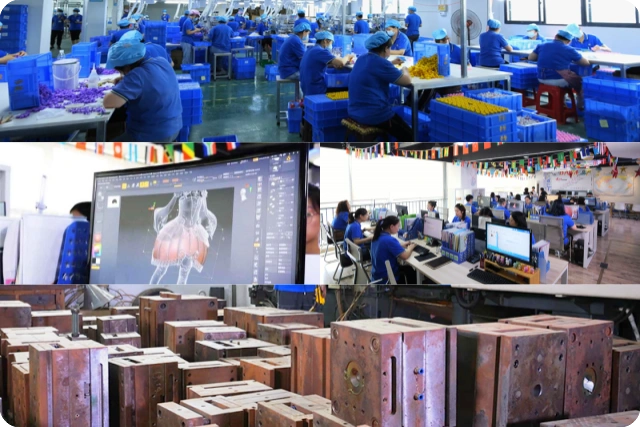
Whether you require product-shaped stress balls for a product launch, mascot giveaways for exhibitions, or large-volume promotional campaigns for international markets, Weijun Toys offers the technical expertise and production capabilities necessary to bring your ideas to life.
 2 Modern Factories 30 Years of Toy Manufacturing Expertise 200+ Cutting-Edge Machines Plus 3 Well-Equipped Testing Laboratories 560+ Skilled Workers, Engineers, Designers, and Marketing Professionals One-Stop Customization Solutions Quality Assurance: Able to Pass EN71-1,-2,-3 and More Tests Competitive Prices and On-Time Delivery










