
TPR stress relief toys have become one of the fastest-growing product categories in the global toy and promotional gift industry. Their soft touch, elastic deformation, and satisfying squeeze-and-release experience make them highly popular among children, office workers, and consumers looking for sensory relaxation products.
For brands, distributors, and retailers, TPR squishy toys are not only low-risk, high-demand products but also highly customizable items suitable for promotional campaigns, seasonal collections, vending machines, and retail shelves. Understanding how these toys are designed, manufactured, and distributed is essential for building a successful product line.
What Are TPR Stress Relief Toys
TPR stress relief toys are sensory squeeze toys made from Thermoplastic Rubber (TPR), a flexible and elastic material that combines the softness of rubber with the moldability of plastic. This unique material allows manufacturers to create toys with a soft-touch surface, strong stretchability, and excellent rebound performance.

TPR is widely used in squishy toys, stress balls, animal figures, and novelty promotional toys because it can be molded into complex shapes while maintaining a pleasant tactile experience. Compared with traditional PVC or foam materials, TPR offers better elasticity, higher durability under repeated squeezing, and a more realistic soft skin-like feel.
How Do Stress Relief Toys Work
Stress relief toys work through both psychological and physical sensory mechanisms. When users squeeze, stretch, or deform a TPR toy, the brain receives repetitive tactile stimulation that helps reduce anxiety and redirect focus.
From a psychological perspective, repetitive hand motion can help regulate emotional tension and improve concentration. This is why stress toys are commonly used in office environments, classrooms, and therapeutic settings.
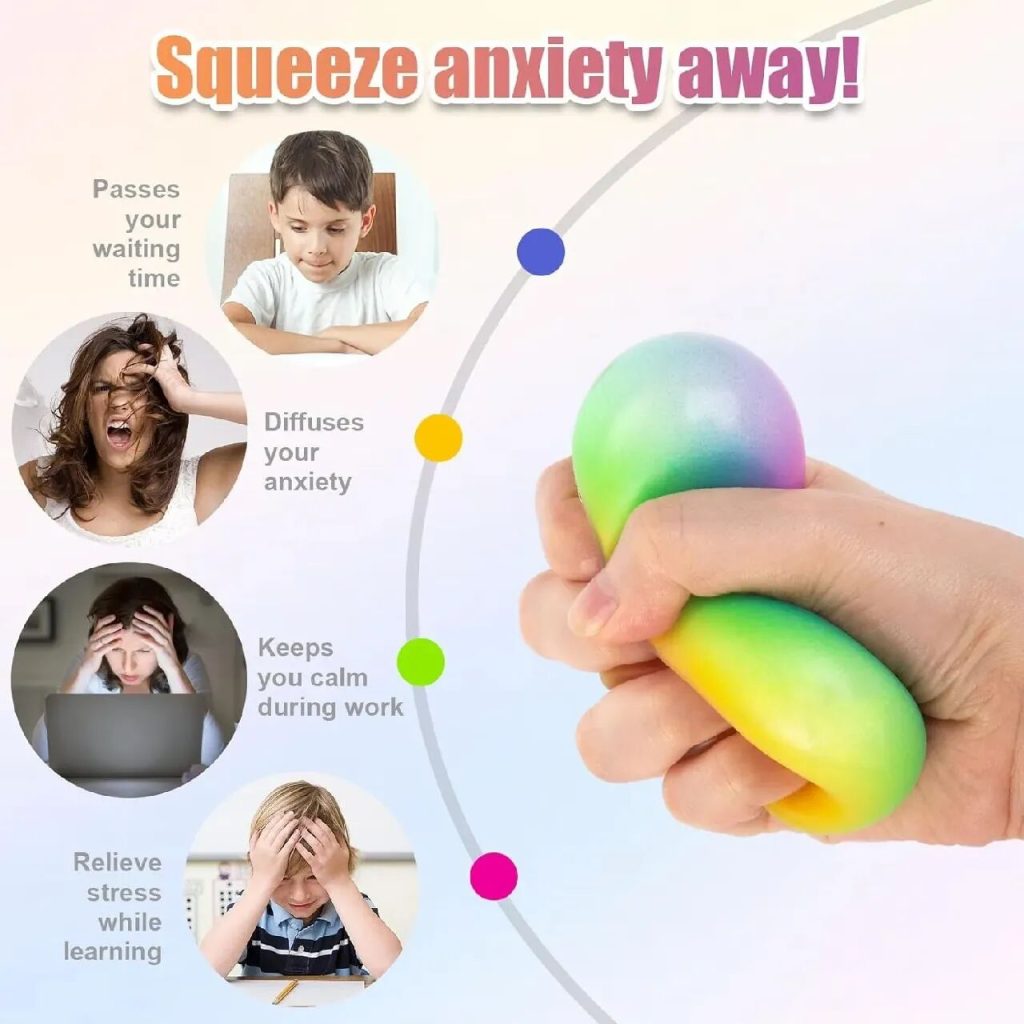
From a sensory perspective, TPR toys provide resistance and rebound feedback. The slow-return elasticity creates a calming visual and tactile rhythm, which enhances relaxation effects. The combination of touch stimulation and visual deformation helps the brain enter a more stable emotional state.
While stress relief toys are not medical devices, they are widely recognized as effective tools for daily stress management, sensory training, and focus improvement for both children and adults.
The Most Popular TPR Stress Relief Toys
The TPR stress toy market includes a wide range of product styles designed for different consumer segments. Animal-shaped squishy toys remain one of the most popular categories, especially cats, dogs, bears, and fantasy creatures with exaggerated cute proportions.
Food-themed stress toys such as hamburgers, ice cream, and fruit designs are also highly popular in promotional and retail markets due to their visual appeal and collectible nature.
Cartoon-style character squishies are often used in licensed products or blind box series, offering strong storytelling and brand engagement value. Stretchy TPR toys, including stretch animals and deformation toys, are favored in vending machines and impulse-buy channels.
In recent years, glow-in-the-dark, scented, and color-changing TPR toys have also gained attention, especially in novelty gift markets and seasonal promotions.
Benefits of TPR Stress Relief Toys for Different Markets
TPR stress relief toys serve multiple market segments due to their versatility. For children, they support sensory development, hand-eye coordination, and emotional expression. The soft texture and playful shapes encourage interactive learning and imaginative play.
For adults, especially office workers, these toys help reduce work-related stress and improve focus during long working hours. They are commonly placed on desks as functional stress-relief tools.
In promotional marketing, TPR toys are widely used as branded gifts because they are affordable, highly customizable, and effective in increasing brand recall. Companies often use them in advertising campaigns, product launches, and event giveaways.
How to Customize TPR Stress Relief Toys
Customizing TPR stress relief toys involves a complete industrial production process that combines product design, material engineering, mold manufacturing, and precision molding technology.
The process begins with concept development, where brands define character style, target audience, product function, and market positioning. At this stage, designers also consider deformation behavior, squeeze resistance, and overall tactile experience, which are critical for TPR products.
Once the concept is confirmed, 3D modeling is created using professional software. Unlike simple toy modeling, TPR toy design must take material elasticity into account. Engineers adjust wall thickness, internal cavity structure, and deformation zones to ensure smooth squeezing performance without cracking or collapsing.
After digital approval, a prototype is produced using high-resolution 3D printing. This prototype is used for physical testing of softness, elasticity, and structural durability before mold development begins.
The most critical stage is mold making. For TPR toys, steel injection molds are typically used for high-volume production. Mold design must carefully control gating systems, venting channels, and cavity balance to ensure uniform filling of molten TPR material. Poor venting can cause air traps, leading to surface defects or incomplete filling.
During injection molding, TPR pellets are heated to a controlled temperature until they reach a molten state. The material is then injected into precision molds under high pressure. Cooling time must be carefully controlled to maintain consistent elasticity and prevent shrinkage deformation. In some cases, multi-layer injection techniques are used to create dual-color or gradient effects.
Finally, every batch undergoes strict quality control testing, including elasticity recovery testing, compression durability testing, and safety compliance checks such as EN71, ASTM F963, and CPSIA standards. Packaging is then designed according to retail, promotional, or e-commerce requirements.
Where to Wholesale TPR Stress Relief Toys
TPR stress relief toys can be sourced through multiple wholesale channels depending on business scale and market strategy.
Online platforms such as Alibaba, Made-in-China, and Global Sources are commonly used by importers and small to medium distributors. These platforms allow buyers to compare suppliers, request samples, and evaluate production capabilities.
For larger brands and long-term cooperation, working directly with manufacturers is more efficient. Direct factory sourcing provides better pricing control, customization flexibility, and quality assurance.
Trade shows and toy exhibitions are also important sourcing channels, where buyers can evaluate product quality firsthand and discuss OEM/ODM projects directly with suppliers.
Why Choose Weijun Toys for TPR Stress Relief Toys
With over 30 years of manufacturing experience, Weijun Toys is a professional OEM & ODM toy manufacturer specializing in PVC, TPR, vinyl, ABS, plush toys, action figures, and blind box collectibles.
Weijun Toys provides full-process customization support, from concept development and 3D modeling to mold engineering, mass production, and packaging design. Our engineering team ensures every TPR stress relief toy meets strict requirements for elasticity, durability, and safety performance.
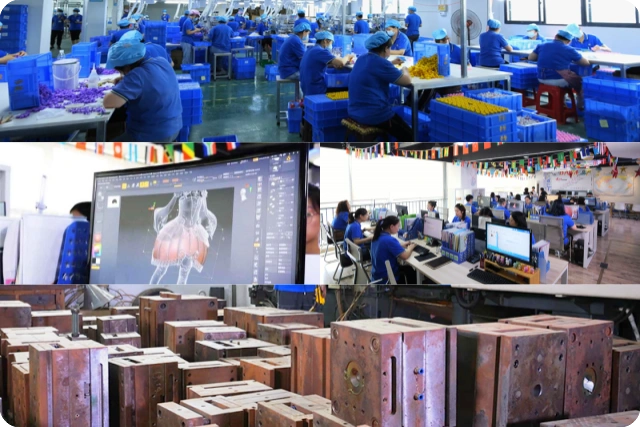
With advanced injection molding systems, strict quality control procedures, and international certification compliance, we help global brands turn creative ideas into high-quality commercial products suitable for retail, promotional, and wholesale markets.
 2 Modern Factories 30 Years of Toy Manufacturing Expertise 200+ Cutting-Edge Machines Plus 3 Well-Equipped Testing Laboratories 560+ Skilled Workers, Engineers, Designers, and Marketing Professionals One-Stop Customization Solutions Quality Assurance: Able to Pass EN71-1,-2,-3 and More Tests Competitive Prices and On-Time Delivery










