
Halloween plush keychains are versatile products for seasonal retail, gift shops, promotional campaigns, and collectible merchandise. Combining the soft appeal of plush toys with the convenience of a portable keychain, these products can feature classic Halloween characters such as pumpkins, ghosts, black cats, bats, witches, and skeletons. Their compact size, accessible price positioning, and wide customization potential make them suitable for retail displays, gift bundles, blind bags, and limited-edition seasonal collections.
For retailers, developing custom Halloween plush keychains offers an opportunity to create distinctive products that reflect a store’s brand identity and appeal to different customer groups. A well-designed collection can feature coordinated characters, themed colors, unique accessories, and customized packaging, helping products stand out in a competitive seasonal market.
What Are Halloween Plush Keychains
Halloween plush keychains are small, soft accessories that combine plush toy designs with keychain attachments, allowing users to hang them on keys, backpacks, handbags, purses, or other personal items. Common designs include pumpkins, ghosts, black cats, bats, spiders, witches, monsters, and other Halloween-inspired characters. Some products feature traditional spooky imagery, while others use cute expressions, rounded shapes, and playful details to create a more lighthearted appearance.
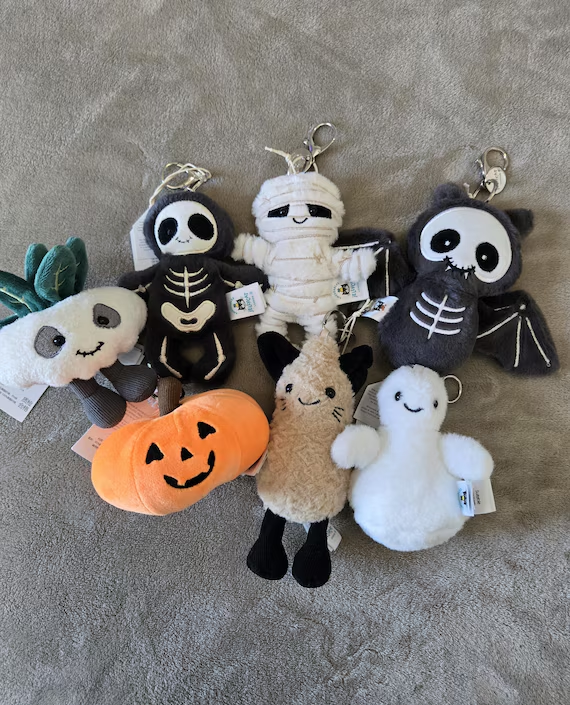
Unlike full-sized plush toys, plush keychains are generally designed to be compact, lightweight, and easy to carry. Their small format also makes them suitable for impulse purchases, seasonal gift sets, collectible series, and promotional merchandise. Retailers can sell individual characters or develop a collection featuring several coordinated designs.
For businesses, custom Halloween plush keychains offer considerable flexibility in design, materials, colors, accessories, and branding. Retailers can create original characters, incorporate recognizable brand mascots, or develop themed collections for specific audiences. The final product can be tailored to a store’s positioning, target customers, and intended retail price.
How to Customize Halloween Plush Keychains
Customizing Halloween plush keychains involves several connected decisions, from creating an appealing character to selecting materials, determining dimensions, choosing attachment hardware, and developing retail packaging.
Design and Character Selection
Character design is the starting point for a successful Halloween plush keychain collection. The character determines the product’s overall appearance and provides the foundation for fabric selection, color matching, embroidery, accessories, and packaging.
Retailers can begin with classic Halloween motifs, including smiling pumpkins, white ghosts, black cats, bats, witches, and friendly monsters. These familiar themes are easy for customers to recognize and can be adapted to different visual styles.
Original characters and brand mascots are another option. Businesses can transform an existing mascot, logo character, or licensed design into a plush keychain to create merchandise that connects with their broader product range. For retailers planning a seasonal collection, developing several related characters can help establish a consistent visual identity and encourage customers to collect multiple designs.
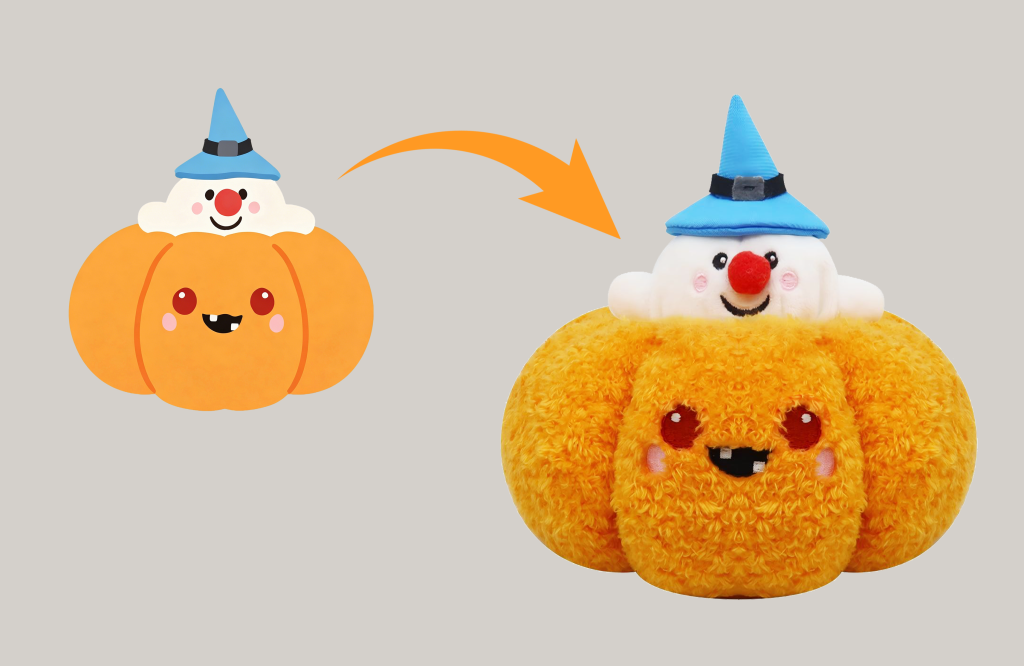
Before production, retailers should prepare clear design references. These may include sketches, digital illustrations, reference photographs, color specifications, and notes on facial expressions, proportions, and decorative details. Front, side, and back views are particularly useful when the character has distinctive features that must remain consistent across different production stages.
Plush Materials, Fabrics, and Accessories
Material selection directly influences the softness, appearance, durability, and perceived quality of Halloween plush keychains. Since these products are frequently handled and attached to bags or keys, retailers should consider both tactile appeal and the ability of the materials to withstand regular use.
Short-pile plush fabric is a practical option for many Halloween designs. Its relatively smooth surface helps embroidered facial features and small decorative details remain visible. It is suitable for pumpkins, ghosts, bats, and other compact characters that require a neat appearance.
Long-pile or fluffy fabrics create a softer, more textured look. They can give monsters, black cats, and fantasy-inspired characters a distinctive appearance. However, longer fibers may partially cover small details, so facial features and decorative elements should be designed with the fabric’s texture in mind.
Accessories can further enhance a design. Examples include miniature fabric hats, bows, scarves, embroidered patches, decorative wings, or small fabric leaves. These details can make a character more distinctive, but they also add production steps and may increase costs. Retailers should prioritize accessories that contribute meaningfully to the design rather than adding unnecessary complexity.
For products intended for children, businesses should pay particular attention to the security of decorative elements, seams, and attachments, as well as the relevant chemical and physical safety requirements. The final material and construction choices should be evaluated for the specific product and destination market.
Size, Shape, and Color Customization
The size and shape of a Halloween plush keychain affect its appearance, portability, material consumption, and retail positioning. Retailers should define the intended dimensions early in the development process. The specification should clarify whether the measurements refer to the plush body alone or the complete product, including the keychain attachment. This distinction helps avoid misunderstandings during sampling and bulk production.
Shape customization is especially important for Halloween characters. A pumpkin may have a rounded body with a green stem, while a ghost may feature a flowing silhouette, and a bat may require distinct wings and ears. These shapes should remain recognizable at a small scale. Excessively thin extensions or complicated outlines may be difficult to sew consistently and could be more vulnerable to damage during use.
Color customization offers another way to distinguish a collection. Retailers can use traditional Halloween colors for broad seasonal appeal or create a coordinated palette that matches a specific brand or store aesthetic. For example, a collection could feature orange pumpkins, lavender ghosts, and mint-green monsters while maintaining consistent facial styling and proportions.
During sampling, retailers should review the product’s proportions, overall silhouette, stuffing distribution, stitching, and color accuracy. A sample that looks appealing in a digital illustration may need adjustments when translated into fabric. Approving a physical sample before mass production helps establish a clear quality reference for the finished collection.
Keychain Attachments and Hardware
The attachment is a functional part of a Halloween plush keychain, not merely a decorative addition. It determines how the product connects to bags, keys, and other personal belongings, so retailers should select hardware that suits the product’s intended use and overall design.
Metal split rings are a familiar option for traditional keychains. They provide a simple way to attach the plush to keys, zipper pulls, and compatible accessories. Their appearance is relatively understated, making them suitable for many character styles.
Lobster clasps and swivel clips offer a convenient way to attach and remove a plush charm from bags or backpacks. They can be particularly useful for fashion accessories and collectible bag charms. The size and style of the clasp should be proportionate to the plush body so that the hardware does not overwhelm the design.
When choosing hardware, retailers should consider material, finish, weight, ease of use, and attachment strength. The point where the hardware connects to the plush body deserves particular attention because it may experience repeated pulling during normal use. Manufacturers should evaluate the attachment construction and conduct appropriate checks based on the product’s intended use and applicable safety requirements.
Custom Labels and Packaging
Custom labels and packaging help transform Halloween plush keychains from generic accessories into branded retail products. They also provide space for product identification, brand presentation, and relevant consumer information.
Packaging should match the product’s sales channel. Individual polybags may be suitable for basic bulk packing or certain retail requirements, while printed header cards and branded bags can create a more finished presentation. Window packaging may allow shoppers to see the plush character before purchasing, and gift-oriented packaging can be appropriate for seasonal gift shops or curated Halloween bundles.
For collectible products, retailers may also consider character-specific cards or packaging that displays the complete series. Blind box packaging can be considered where the sales concept and applicable labeling requirements support it, but businesses should ensure that the presentation accurately reflects the product and does not create misleading expectations.
For international sales, packaging and product labeling requirements may vary by destination and intended age group. These details should be confirmed early in development rather than added at the last minute, as late changes can affect artwork approval, costs, and production schedules.
How to Choose a Reliable Halloween Plush Keychain Manufacturer
Choosing the right manufacturer is essential for turning a custom design into a consistent, commercially viable product. Retailers should assess more than the quoted unit price, considering the manufacturer’s development capabilities, production processes, quality management, communication, and experience handling customized orders.
First, evaluate the manufacturer’s OEM and ODM capabilities. OEM production is suitable when a retailer already has artwork, specifications, or a defined product concept. A capable partner should be able to discuss design feasibility and identify potential production issues before they become costly problems.
Second, ask about the sampling and approval process. A reliable manufacturer should establish clear specifications, provide samples for review, and communicate how revisions will be handled. Retailers should confirm the expected development timeline and agree on the approved sample as the reference for bulk production.
Third, review quality control procedures. For plush keychains, important checkpoints may include fabric and color consistency, stitching quality, stuffing distribution, embroidery accuracy, attachment strength, and packaging condition. The appropriate safety testing and documentation will depend on the product, its intended age group, and the destination market. Retailers should verify applicable requirements rather than assuming one certification automatically covers every product.
Production capacity and delivery planning are also important, especially for Halloween merchandise that must reach stores before a fixed seasonal deadline. Discuss the expected order quantity, production lead time, packaging requirements, inspection arrangements, and shipping schedule with the supplier. Leaving sufficient time for sampling, revisions, and production is particularly important for seasonal products.
Finally, evaluate communication. A manufacturer that communicates clearly and flags potential problems early can help retailers manage risk and plan more confidently.
Why Choose Weijun Toys for Custom Halloween Plush Keychains
Weijun Toys provides professional OEM and ODM services for businesses developing customized toy products and branded merchandise. With more than 30 years of toy manufacturing experience, the company supports projects from concept development and design refinement to sampling, mass production, and packaging.

For retailers planning custom Halloween plush keychains, the development process begins with understanding the intended character style, target market, product dimensions, material preferences, and order requirements. Businesses with existing artwork can provide their designs and specifications for evaluation.
Customization can cover character appearance, colors, materials, decorative details, product dimensions, accessories, labels, and packaging, subject to design feasibility and project requirements. This flexibility allows retailers to develop coordinated seasonal collections, original brand mascots, promotional merchandise, and character-based products tailored to their sales channels.
For quality and compliance, product requirements should be established according to the intended market, age grading, materials, and construction. Weijun Toys can work with buyers to clarify specifications and applicable testing expectations as part of the product development process.
Whether you are developing a new Halloween collection, adapting an existing character into a plush bag charm, or creating customized seasonal merchandise for a retail or promotional campaign, Weijun Toys can help move the project from concept to finished product.
 2 Modern Factories 30 Years of Toy Manufacturing Expertise 200+ Cutting-Edge Machines Plus 3 Well-Equipped Testing Laboratories 560+ Skilled Workers, Engineers, Designers, and Marketing Professionals One-Stop Customization Solutions Quality Assurance: Able to Pass EN71-1,-2,-3 and More Tests Competitive Prices and On-Time Delivery










