
Custom action figures have become an effective way for brands, entertainment companies, retailers, game developers, artists, and promotional businesses to turn characters and creative concepts into tangible products. A well-designed action figure can serve as collectible merchandise, promotional merchandise, licensed character products, retail products, or part of a broader product line. This guide explains how custom action figures are made, from the initial concept through mass production and final delivery.
1. Define the Concept and Design
Every custom action figure starts with a clear product concept. Before creating a 3D model or manufacturing mold, brands should determine what the figure represents, who it is designed for, and how it will be used. The product may be based on an original character, brand mascot, game character, entertainment property, sports identity, or collectible concept.
At this stage, brands should define the character’s appearance, personality, proportions, pose, clothing, accessories, facial expression, and overall visual style. Product size is also important because it affects the level of detail, material consumption, tooling requirements, packaging, and final cost. Common action figure sizes vary depending on the product category and target market, so the desired dimensions should be established before 3D modeling begins.
For brands working with an existing character or entertainment property, intellectual property rights should also be addressed before production begins. A manufacturer can produce an authorized licensed character, but appropriate licensing or authorization from the IP owner is required.
2. Choose Materials and Production Methods
Material selection has a direct impact on an action figure’s appearance, durability, flexibility, weight, production cost, and manufacturing process. The right material should therefore be selected according to the character design, product positioning, production volume, required detail, and target price.
PVC is one of the most widely used materials for custom action figures and character toys. It offers a good balance between durability, detail reproduction, flexibility, and cost efficiency. PVC is particularly suitable for figures with rounded shapes, expressive characters, small accessories, and detailed surface features.
One of its advantages is its ability to reproduce relatively complex shapes while maintaining a durable finished product. Different levels of softness can also be achieved depending on the formulation. PVC is therefore commonly used for character figures, collectible toys, promotional figures, and other customized products.
ABS is a hard and rigid plastic commonly used for structural components, accessories, bases, and action figures that require greater rigidity. It provides good dimensional stability and a smooth surface that can work well with painting and printing.
ABS is particularly useful when an action figure includes articulated components or parts that need to maintain their shape. Compared with softer PVC, however, ABS is less flexible and may be less suitable for certain rounded or soft-looking character designs.
Vinyl is another popular material for collectible figures, particularly stylized characters with simplified shapes and distinctive silhouettes. It can provide a smooth surface and is well suited to products where visual design and collectible appeal are more important than complex articulation.
Vinyl figures can be produced through processes such as rotocasting, making the material particularly suitable for larger, hollow character figures. However, vinyl manufacturing is generally more specialized than conventional plastic injection molding, and the production method should be selected according to the product’s size, structure, quantity, and design.
Resin is often selected for highly detailed collectible figures, art toys, prototypes, and relatively low-volume products. It can reproduce intricate details and complex forms effectively, making it attractive for premium collectibles and limited-edition products.
The main limitations are production cost, production efficiency, and material characteristics. Resin is generally less suitable than injection-molded plastics for very large-volume, cost-sensitive toy production.
Recycled plastics can also be considered for brands seeking to incorporate sustainability into their product strategy. Depending on the product and target market, recycled or partially recycled plastic materials may be suitable for selected components or products.
However, material selection should not be based on sustainability claims alone. Brands should evaluate mechanical performance, appearance, color consistency, safety requirements, availability, and production compatibility before selecting recycled materials.
Material selection is closely connected to the manufacturing process. Injection molding is widely used for large-volume production because it provides consistent dimensions, efficient cycle times, and good repeatability. It is particularly suitable for PVC and ABS components with defined shapes and relatively high production quantities.
Rotocasting, also known as rotational casting, is commonly used for hollow vinyl figures. The process allows manufacturers to create larger, lightweight figures with a relatively uniform wall structure and is especially suitable for stylized collectible figures.
3. Develop the Prototype
Once the design, material, and production method have been confirmed, the next stage is prototype development. The prototype provides the first physical representation of the proposed action figure and allows the brand and manufacturer to evaluate whether the digital design can be successfully translated into a physical product.
A prototype can be developed using methods such as 3D printing, depending on the complexity and requirements of the project. Unlike mass-production tooling, 3D printing allows manufacturers to make design adjustments relatively quickly without immediately committing to expensive production molds.
For articulated action figures, the prototype stage is particularly important. The manufacturer needs to verify whether joints have sufficient movement and whether different components fit together correctly without compromising the appearance or durability of the figure. A well-developed prototype reduces the risk of discovering major design problems after tooling has already started. It also provides a physical reference for the subsequent production stages.
4. Review and Approve the Sample
After the prototype has been developed, the brand should conduct a detailed sample review before moving forward with tooling and mass production.
This stage is also an opportunity to confirm practical product requirements. Brands should verify that accessories fit properly, joints function as intended, the figure can stand securely when required, and individual components can be assembled efficiently.
Any changes should be clearly documented and communicated to the manufacturer. Once all modifications have been completed, the final pre-production sample should be approved in writing.
The approved sample becomes an important quality reference for mass production. The closer the final production units remain to this approved standard, the easier it is to maintain product consistency.
5. Tooling and Mold Making
After the sample has been approved, the manufacturer can begin tooling and mold making. This is one of the most technically important stages of custom action figure manufacturing, as the quality and precision of the mold directly affect the consistency, dimensional accuracy, and surface details of the final products.
For injection-molded action figures, steel molds are commonly used for mass production because they offer excellent durability, dimensional stability, and wear resistance. Compared with softer tooling materials, properly manufactured steel molds can withstand repeated injection cycles and are suitable for large-volume production. They are particularly valuable for commercial action figures that require consistent quality across thousands or even hundreds of thousands of units.
6. Injection Molding, Painting, and Assembly
With the tooling completed and approved, the action figure can enter mass production. For injection-molded figures, plastic material is heated and injected into the mold under controlled conditions. Once the material cools and solidifies, the molded component is removed and prepared for subsequent processing.
Trimming
Freshly molded parts may have excess material, gate marks, or other production remnants that need to be removed. Workers or automated equipment carefully trim and clean the components to achieve the required appearance and prepare them for painting and assembly.
Painting
Painting gives the action figure its final visual identity. Depending on the design, manufacturers may apply base colors through spray painting and then add additional colors or effects to individual components.
Professional painting requires controlled application to maintain consistent color coverage and avoid overspray, uneven surfaces, or unwanted color contamination. Complex figures may require multiple painting stages because different areas need different colors.
Pad Printing and Detailing
Pad printing is commonly used to apply small graphics, facial features, logos, patterns, and other detailed markings that may be difficult to achieve through conventional painting.
After the main painting and printing processes, additional detailing can be performed to enhance the character’s appearance. This may include highlights, shading, small decorative elements, weathering effects, or other visual treatments depending on the design.
Assembly
Once individual components have been molded, painted, printed, and inspected, they are assembled into the finished action figure. Assembly may involve attaching limbs, accessories, weapons, bases, clothing components, or other parts.
For articulated figures, assembly also includes installing and checking the joint components to ensure appropriate movement and fit. The final assembled figure should match the approved sample in both appearance and functionality.
7. Quality Control and Safety Testing
Quality control should be implemented throughout the manufacturing process rather than performed only after all products have been completed. Effective quality management helps identify problems early and reduces the risk of defective products reaching customers.
Safety testing is equally important for action figures intended for children. Depending on the target market, applicable requirements may include ASTM F963 and CPSIA in the United States, EN 71 in Europe, and chemical requirements such as REACH. Specific testing requirements depend on the product’s intended age group, materials, components, and destination market.
Small parts require particular attention because action figures may include miniature accessories or detachable components. Materials, coatings, paints, inks, and other components should also be evaluated according to applicable safety requirements.
8. Packaging and Delivery
Packaging is the final stage before the custom action figures reach the market. In addition to protecting the product during transportation, packaging plays an important role in branding and retail presentation.
Brands can choose packaging formats according to their product positioning and sales channel. Options may include custom boxes, blister packaging, window boxes, display packaging, collector boxes, and blind box packaging. Premium collectible figures may require more sophisticated packaging with custom inserts, printed artwork, protective components, or special finishes.
Before shipment, finished products should undergo final inspection, counting, packaging verification, and carton inspection. Products are then packed according to the agreed shipping requirements and prepared for domestic or international delivery.
Weijun Toys: Your Reliable Custom Action Figure Manufacturer
Weijun Toys has 30+ years of toy manufacturing experience and provides professional OEM and ODM services for brands, retailers, wholesalers, promotional companies, and other businesses. Our capabilities cover a wide range of customized products, including PVC figures, ABS plastic toys, vinyl collectibles, action figures, plush toys, capsule toys, keychains, and customized promotional products.
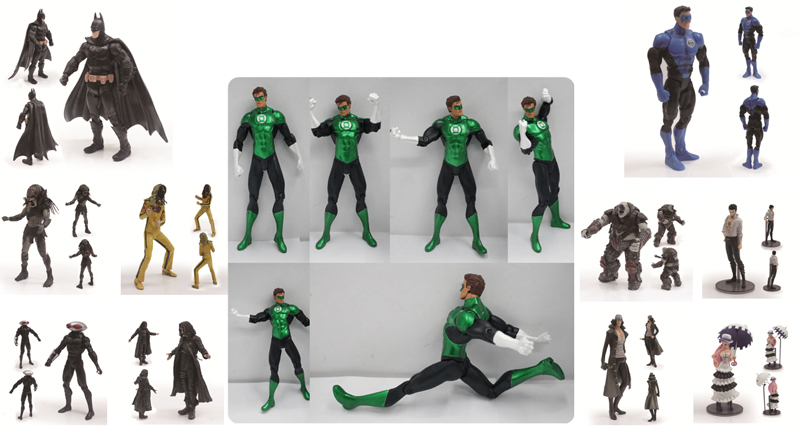
We provide support throughout the custom action figure manufacturing process, from initial concept development and 3D modeling to prototyping, tooling, molding, painting, printing, assembly, quality inspection, packaging, and delivery. This integrated approach allows customers to work with one manufacturing partner throughout the product development cycle.
We also understand that different brands have different product positioning and budgets. Whether you are developing a mass-market promotional figure, a collectible character, a licensed action figure, or a customized merchandise series, production solutions can be tailored according to the required quantity, design complexity, materials, finishing effects, and packaging specifications.
With experienced production teams, integrated manufacturing capabilities, and OEM/ODM support, Weijun Toys provides a complete solution for brands looking to create custom action figures from concept to finished product.
 2 Modern Factories 30 Years of Toy Manufacturing Expertise 200+ Cutting-Edge Machines Plus 3 Well-Equipped Testing Laboratories 560+ Skilled Workers, Engineers, Designers, and Marketing Professionals One-Stop Customization Solutions Quality Assurance: Able to Pass EN71-1,-2,-3 and More Tests Competitive Prices and On-Time Delivery










