
Custom collectible figurines are an effective way for brands to turn original characters, mascots, and creative concepts into tangible products. Popular across toy retail, entertainment, lifestyle merchandise, promotional campaigns, and licensed collections, figurines can help brands strengthen recognition, engage collectors, and develop distinctive product lines.
Unlike generic merchandise, custom collectible figurines can be designed around a brand’s identity, target audience, and marketing objectives. Businesses can customize the character’s appearance, pose, size, material, colors, accessories, and packaging to create products for retail sales, limited-edition releases, blind boxes, or promotional giveaways.

1. Define Your Concept and Target Audience
The first step in making custom collectible figurines is defining the product concept and target audience. A clear concept guides design decisions, material selection, production methods, and budget planning.
Start by identifying the purpose of the figurine. A brand mascot figurine may focus on brand recognition, while an anime-inspired collectible may prioritize character accuracy and detailed decoration. Figurines designed for blind box collections may need multiple variations, consistent sizing, and packaging suitable for a series.
Next, determine the target audience. Children’s promotional figures often emphasize recognizable shapes, durability, and age-appropriate construction. Adult collectibles may require more intricate sculpting, detailed painting, and premium presentation. Your target market will influence the product’s complexity, expected price, and quality requirements.
At this stage, establish preliminary specifications, including approximate size, quantity, budget, design variations, and intended sales channels. If the figurine features licensed characters or third-party intellectual property, ensure the necessary permissions are secured before production.
2. Choose the Right Materials
Material selection affects the appearance, durability, production cost, and manufacturing process of custom collectible figurines. PVC, ABS, vinyl, and resin are common options, each offering different advantages.
PVC (polyvinyl chloride) is widely used for collectible figures because it supports a broad range of shapes, colors, and surface finishes. It is suitable for character figurines, mini figures, and multi-piece designs. PVC can also accommodate painted details and decorative finishes, making it a practical option for many commercial collections.
ABS (acrylonitrile butadiene styrene) is a rigid thermoplastic valued for its strength and dimensional stability. It is often suitable for structural parts, accessories, and articulated components. However, the material’s rigidity may make it less appropriate for certain designs that require a softer feel or highly organic forms.
Vinyl is commonly associated with designer toys and hollow character figures produced through specialized molding processes. It can create distinctive silhouettes and smooth surfaces. The final texture, wall thickness, and level of detail depend on the vinyl formulation and manufacturing method.
Resin is suitable for collectible statues and small-batch figures that require fine sculptural details. It can capture intricate features and support detailed hand painting. However, resin products may be more brittle than some thermoplastics, and manual finishing can increase labor costs, making resin less economical for certain high-volume orders.
The best material depends on the design, intended quantity, target price, and desired finish. An experienced manufacturer can help evaluate these factors before the design moves into production.
3. Create the Design and 3D Model
Once the concept and material are established, the next step is translating the idea into a production-ready design. Brands can provide sketches, illustrations, character sheets, reference images, or existing 3D files. A manufacturer or design team can then refine the concept for physical production.
The design process should establish the figurine’s proportions, pose, facial expression, surface details, accessories, and overall dimensions. For characters with distinctive features, maintaining accurate proportions and consistent visual details is especially important.
A 3D model allows the design team to evaluate the figure from multiple angles and identify potential manufacturing challenges. The model should also account for the selected material and molding process. A design that looks attractive on screen may need modifications to achieve reliable mold release, consistent wall thickness, or efficient assembly. Reviewing these factors early can help reduce costly revisions later.
4. Develop and Approve the Sample
Sample development allows brands to evaluate the physical figurine before committing to mass production. Depending on the project, the prototype may be produced through 3D printing, hand sculpting, or another suitable prototyping method.
During sample review, examine the overall proportions, facial features, surface texture, dimensions, and stability. Check whether the physical figure accurately represents the approved design and whether small details remain visible at the intended scale.
Color and finish should also be evaluated. Painted areas, gradients, decorative patterns, and accessories can look different on a physical sample than in digital artwork. If necessary, provide consolidated feedback and request revisions.
For complex designs, more than one sampling round may be needed. Once the sample meets the agreed requirements, approve it as the reference for subsequent tooling and production. Any changes after approval should be documented to keep the final product consistent with the approved specifications.
5. Create Molds and Mass Production
After the design and sample are approved, the manufacturer prepares the tooling required for mass production. The specific process depends on the selected material and manufacturing method.
For many PVC and ABS figurines, production involves metal molds designed for the appropriate molding process. Vinyl figures may require specialized tooling and molding techniques, while resin figures often use silicone molds for casting, particularly in small-batch production.
Mold design must account for the figurine’s geometry, component separation, material behavior, and production requirements. Complex characters may need multiple molds or separate parts to achieve the desired details and simplify assembly.
Before full-scale production begins, the manufacturer should verify that the tooling can produce parts that meet the approved specifications. A controlled initial production run can help identify issues with dimensions, surface finish, or component fit before larger quantities are manufactured.
6. Manufacture, Paint, and Assemble
Once the molds and production process are ready, manufacturing begins according to the approved specifications. Depending on the material, this may involve injection molding, vinyl rotocasting, or resin casting.
After molding or casting, the parts may require trimming, polishing, cleaning, or other surface preparation. They are then decorated using suitable techniques, such as spray painting, pad printing, or manual painting. The method depends on the design complexity, required precision, and production volume.
For collectible figurines with multiple colors and intricate patterns, consistent decoration is particularly important. Clear color references, approved samples, and standardized production procedures help maintain uniformity across the batch.
The finished components are then assembled where necessary. This may include attaching accessories, connecting separate body parts, or fitting structural components. Manufacturers should check alignment, component fit, and the security of attachments before the products move to final inspection.
7. Quality Control and Custom Packaging
Quality control helps ensure that finished figurines meet the agreed design, appearance, and functional requirements. Inspections may cover dimensions, color consistency, surface defects, paint application, assembly, and packaging accuracy.
For products intended for children, the manufacturer and buyer should also determine the applicable safety requirements based on the product design, age grading, materials, and destination market. Relevant testing may address chemical, mechanical, and physical safety. Buyers should verify that required test reports and compliance documentation apply to the actual finished product.
Packaging is another important part of the collectible experience. Options include display boxes, window boxes, blister packaging, individual bags, and blind box packaging. Retailers can customize graphics, logos, inserts, and product information to reinforce brand identity and suit the intended sales channel.
Packaging should protect the figurine during transportation while presenting it attractively. For collectible series, consistent packaging can unify the range, while character-specific artwork can help distinguish individual designs.
8. Choose a Reliable Collectible Figurine Manufacturer
Choosing the right manufacturer is essential for balancing design quality, production efficiency, and cost. Look for a supplier with relevant experience in the material and product category you intend to develop.
Evaluate the manufacturer’s design support, prototyping capabilities, tooling process, decoration techniques, and ability to manage bulk orders. Ask how samples are approved, how quality is monitored, and how production changes are communicated.
Discuss production lead times and shipping arrangements early, especially if the figurines are intended for a seasonal launch or a fixed promotional schedule.
A reliable partner should be transparent about technical limitations and help identify practical solutions when a design is difficult to manufacture. This collaboration can help turn a creative concept into a commercially viable collectible product.
Why Choose Weijun Toys for Custom Collectible Figurines
Weijun Toys has over 30 years of toy manufacturing experience and provides professional OEM and ODM services for brands, retailers, wholesalers, promotional companies, and other businesses. Our product capabilities include PVC figurines, ABS plastic figures, resin collectibles, action figures, plush toys, blind box collectibles, keychains, capsule toys, and customized promotional products.
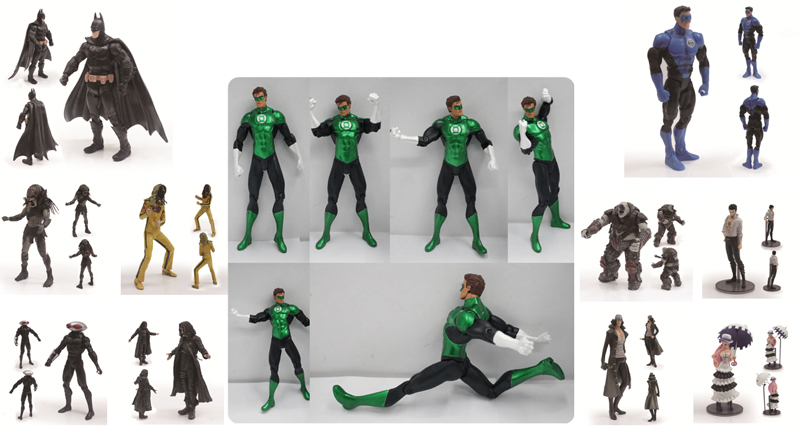
For custom collectible figurines, Weijun Toys supports the complete product development process, from concept development and 3D modeling to prototyping, mold making, material processing, painting, pad printing, assembly, quality inspection, custom packaging, and delivery. Our integrated manufacturing capabilities help brands turn creative concepts into high-quality, production-ready collectibles through a streamlined development process.
Whether you are developing original character figurines, designer collectibles, licensed character merchandise, or a themed figurine collection, Weijun Toys offers flexible customization options to meet your brand’s needs. You can customize character designs, sizes, poses, colors, materials, accessories, surface finishes, decorative details, and packaging. With our OEM and ODM services, we help bring your ideas to life, from initial concept to mass production.
 2 Modern Factories 30 Years of Toy Manufacturing Expertise 200+ Cutting-Edge Machines Plus 3 Well-Equipped Testing Laboratories 560+ Skilled Workers, Engineers, Designers, and Marketing Professionals One-Stop Customization Solutions Quality Assurance: Able to Pass EN71-1,-2,-3 and More Tests Competitive Prices and On-Time Delivery










