
Educational toys are designed to help children learn, explore, and develop skills through play. From building blocks and puzzles to STEM kits, pretend-play sets, and animal figurines, these toys combine entertainment with opportunities to develop cognitive, physical, social, and creative abilities. They are widely used at home, in preschools, educational settings, and children’s retail markets.
As parents and educators increasingly look for toys that offer meaningful play experiences, educational toys have become an important category for toy retailers, distributors, and brands. However, not every toy needs to teach a formal lesson to have educational value. Products that encourage curiosity, experimentation, imagination, and interaction can also support children’s learning.
What Are Educational Toys
Educational toys are toys designed to support children’s learning and development through play. They encourage children to explore concepts, practice skills, solve problems, and understand the world around them in an engaging and age-appropriate way.
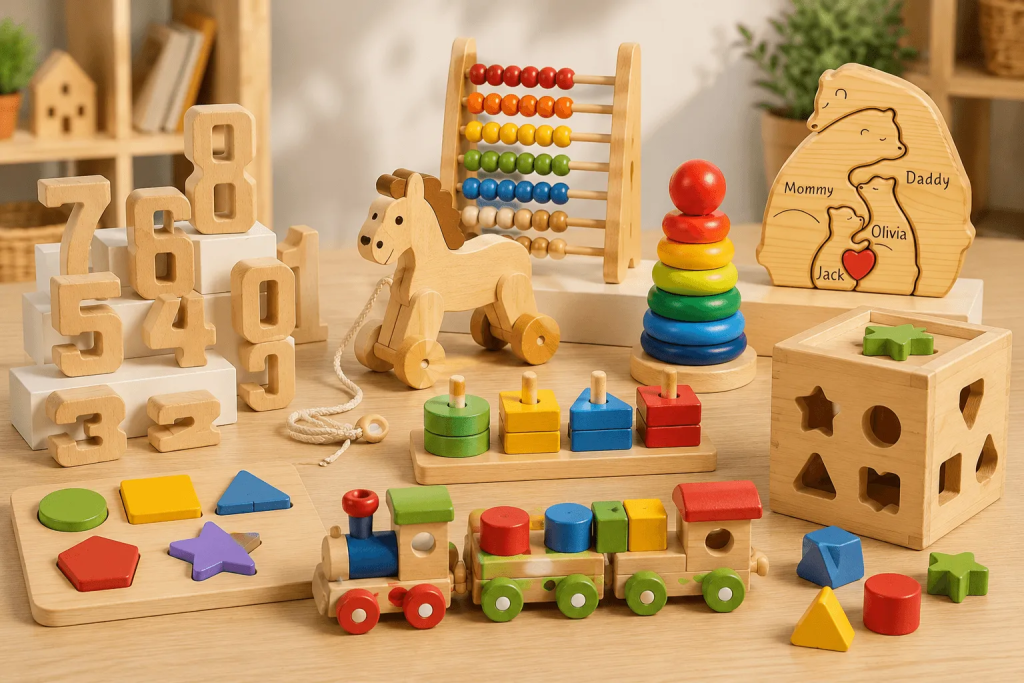
Unlike toys designed primarily for passive entertainment, educational toys often invite children to participate actively. A puzzle encourages them to recognize patterns and solve problems, building blocks introduce spatial relationships and basic engineering concepts, and pretend-play sets help children explore everyday roles and social situations.
Educational toys cover a broad range of learning areas, including language, mathematics, science, creativity, motor coordination, and social development. Some products focus on a specific skill, while others support several developmental areas simultaneously.
What Are the Types of Educational Toys
Educational toys come in many forms, each offering different learning opportunities. Understanding these categories helps parents, educators, and buyers select products that match children’s interests and developmental needs.
STEM Toys
STEM toys introduce concepts related to science, technology, engineering, and mathematics through hands-on activities. Examples include beginner robotics kits, simple science experiment sets, counting games, and toys that demonstrate basic mechanical principles.
These toys encourage children to ask questions, test ideas, observe results, and learn through trial and error. The appropriate level of complexity depends on the child’s age and experience, with younger children benefiting from simple cause-and-effect activities and older children exploring more structured challenges.
Building and Construction Toys
Building and construction toys include blocks, interlocking bricks, magnetic construction pieces, and other components that children can combine to create structures. They help children explore shapes, balance, spatial relationships, and basic engineering concepts.
These toys also encourage creativity because children can develop their own designs rather than follow a single fixed outcome. For younger children, larger and simpler pieces may be more appropriate, while older children may enjoy more complex building challenges.
Puzzles and Problem-Solving Toys
Puzzles and problem-solving toys encourage children to identify patterns, compare shapes, recognize relationships, and work toward a goal. Common examples include jigsaw puzzles, shape sorters, matching games, maze toys, and logic challenges.
These products can help develop concentration, visual recognition, and persistence. Choosing the right difficulty level is important: puzzles that are too easy may offer little challenge, while overly complicated ones may discourage younger learners.
Pretend Play and Role-Playing Toys
Pretend-play toys allow children to imitate real-life activities and invent imaginary scenarios. Examples include toy kitchens, doctor kits, tool sets, miniature shops, dolls, and character playsets.
Through role-playing, children can practice communication, cooperation, storytelling, and emotional expression. These toys also help them explore familiar social roles and everyday routines in a playful environment.
Interactive and Electronic Learning Toys
Interactive learning toys may include sound effects, lights, buttons, voice prompts, or electronic responses that encourage children to engage with educational content. Examples include talking learning toys, electronic activity boards, and interactive plush toys.
When designed appropriately, these products can introduce vocabulary, numbers, music, and simple cause-and-effect concepts. However, electronic features should support rather than dominate play. Parents and educators should consider age suitability, screen exposure where applicable, privacy for connected products, and the quality of the learning experience.
Alphabet and Mathematics Toys
Alphabet and mathematics toys help children become familiar with letters, numbers, counting, basic arithmetic, and early language concepts. Examples include alphabet blocks, number puzzles, counting counters, letter-matching games, and educational flashcards with interactive components.
These products can make abstract concepts more concrete by allowing children to see, touch, arrange, and manipulate learning materials. Repetition and hands-on practice can help reinforce early literacy and numeracy skills.
Animal Figures and Miniature Playsets
Animal figures and miniature playsets offer opportunities for learning about animals, habitats, nature, and the environment. Children can use realistic animal figurines to explore differences between species, group animals by characteristics, and create imaginary habitats or stories.
These toys can support both independent and shared play. Parents and educators can introduce simple activities, such as identifying animal names. For toy brands and retailers, customizable animal figures also provide opportunities to develop educational collections around wildlife, farm animals, marine life, and other nature-related themes.
What Are the Benefits of Educational Toys for Kids
Cognitive Development and Problem-Solving Skills
Educational toys give children opportunities to think, observe, compare, and make decisions. Puzzles, building sets, and matching games encourage them to recognize patterns, understand relationships, and find solutions to challenges.
When children experiment with different approaches, they learn that problems may have more than one possible solution. This process can help develop reasoning, concentration, and persistence over time.
Develop Fine Motor Skills and Hand-Eye Coordination
Toys that involve stacking, sorting, fitting, drawing, or assembling small components can help children practice coordinated hand movements. Building blocks, shape sorters, puzzles, and suitable miniature playsets encourage them to manipulate objects with increasing control.
The level of physical challenge should match the child’s age and abilities. Toys for younger children should be designed with appropriate dimensions and should not contain accessible small parts that create choking hazards.
Encourage Creativity and Imagination
Open-ended toys allow children to create their own stories, structures, characters, and play scenarios. Construction toys, pretend-play sets, dolls, and animal figures can be used in many different ways, giving children opportunities to express ideas and experiment with possibilities.
This flexibility makes open-ended toys valuable for repeated play because children can invent new activities as their interests develop.
Encourage Independent Learning and Exploration
Educational toys can motivate children to explore at their own pace. A child might experiment with different building structures, try several ways to complete a puzzle, or organize animal figures into different groups.
These activities provide opportunities to make choices, observe outcomes, and learn through experience. Adults can support the process by asking questions and offering guidance without always providing the answer.
Improve Language and Social Skills
Many educational toys encourage children to communicate, share ideas, and cooperate. Board games, role-playing sets, and shared construction activities can help children practice taking turns, explaining their thinking, and working toward common goals.
Pretend play can also introduce new vocabulary and storytelling skills. When children describe characters, invent scenarios, or explain how something works, they have opportunities to practice language in meaningful contexts.
How to Choose the Right Educational Toys for Kids
Choosing educational toys involves balancing developmental suitability, learning value, safety, and enjoyment. A product that matches a child’s interests and abilities is more likely to encourage meaningful, repeated play.
Consider the Age and Developmental Stage
Always review the manufacturer’s recommended age range and consider the child’s individual abilities. Younger children often benefit from simple, sturdy toys with clear actions and outcomes, while older children may enjoy more complex puzzles, construction projects, or structured STEM activities.
Age recommendations are especially important for identifying choking hazards and other product risks. Buyers should not assume that a toy is appropriate simply because it is marketed as educational.
Identify Learning Goals and Interests
Consider what the child enjoys and what skills the toy may encourage. A child interested in animals may engage more with miniature wildlife figures and habitat playsets, while a child who enjoys building may prefer construction toys.
Learning goals can include early literacy, numeracy, problem-solving, creativity, or social interaction. The most suitable choice often combines a useful learning opportunity with an activity the child genuinely enjoys.
Check Materials, Durability, and Safety
Educational toys should be made from materials appropriate for their intended use and age group. Examine the construction, surface finish, component security, and durability, especially for products likely to experience repeated handling.
For children’s toys, applicable safety requirements depend on the destination market, age grading, materials, and product design. Buyers should verify relevant testing and documentation rather than relying solely on general supplier claims.
Balance Educational Value with Playability
A toy does not need to deliver formal lessons to support learning. Products that encourage curiosity, imagination, and experimentation can provide meaningful developmental opportunities without making play feel like schoolwork.
Look for toys that allow children to participate actively and use them in different ways. A balance of learning potential and entertainment can encourage longer engagement and repeated use.
What to Look for When Buying Educational Toys in Bulk
For toy retailers, distributors, educational suppliers, and brands, sourcing educational toys in bulk requires additional consideration beyond choosing a suitable product.
Product variety and target age groups are important when building a balanced range. Buyers may combine STEM toys, puzzles, pretend-play products, animal figures, and interactive toys to serve different customer needs. Clear age grading and product descriptions can also help retailers organize their assortments.
Customization and OEM/ODM capabilities matter for businesses developing exclusive products. Depending on the manufacturer’s services, customization may include original character designs, colors, dimensions, materials, accessories, surface decoration, and packaging. OEM production is suitable for buyers with established designs, while ODM services can support concept development and design refinement.
Material quality and safety compliance should be assessed before placing a large order. Ask suppliers about material specifications, quality-control procedures, and applicable product testing. Requirements may vary by market and product category, so compliance should be verified for each finished product.
Packaging and branding influence both retail presentation and logistics. Options may include branded boxes, printed bags, display packaging, instruction sheets, and product labels. Packaging should protect the product, communicate relevant information, and suit the intended sales channel.
Production capacity and lead times are especially important for bulk orders and seasonal campaigns. Discuss minimum order quantities, sampling schedules, production timelines, inspection arrangements, and shipping plans before confirming an order. Requesting samples and approving specifications in advance can help reduce misunderstandings during mass production.
Why Choose Weijun Toys for Custom Educational Toys
Weijun Toys provides professional OEM and ODM services for businesses developing customized toys, figurines, and collectible products. With more than 30 years of toy manufacturing experience, Weijun Toys supports projects from concept development and design refinement to sampling, mass production, and packaging.
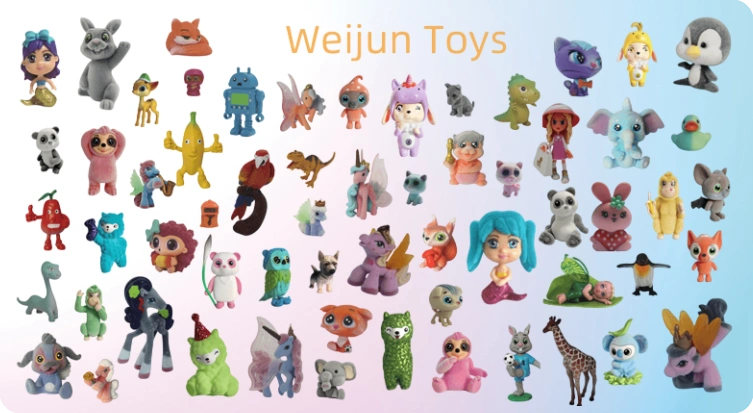
For educational toy projects, customization can be discussed according to the product concept and intended market. Options may include animal figures, miniature playsets, character designs, colors, sizes, surface finishes, accessories, and branded packaging. These capabilities can help businesses develop products around themes such as wildlife, farm animals, nature exploration, and imaginative play.
For buyers sourcing educational toys in bulk, Weijun Toys can discuss product specifications, sampling, customization requirements, production planning, and applicable safety expectations. Product suitability and testing needs should be determined according to the specific design, intended age group, and destination market.
Whether you are developing custom animal figurines, miniature educational playsets, or branded toys for retail and promotional campaigns, Weijun Toys can help assess the manufacturing options for your project.
 2 Modern Factories 30 Years of Toy Manufacturing Expertise 200+ Cutting-Edge Machines Plus 3 Well-Equipped Testing Laboratories 560+ Skilled Workers, Engineers, Designers, and Marketing Professionals One-Stop Customization Solutions Quality Assurance: Able to Pass EN71-1,-2,-3 and More Tests Competitive Prices and On-Time Delivery










