
Technology is becoming increasingly integrated into children’s play and learning, and smart toys are one of the most notable developments in the modern toy industry. Unlike traditional toys that rely mainly on physical interaction, smart toys can incorporate technologies such as artificial intelligence, voice recognition, sensors, Bluetooth, cameras, programmable functions, or mobile connectivity to create more interactive play experiences.
Smart toys are now used for entertainment, early education, language development, creative play, and even emotional companionship. From AI-powered talking plush toys and interactive robots to coding kits and educational learning devices, there are many different forms of smart toys available on the market. Their ability to respond to children and adapt to different interactions makes them particularly attractive to parents and educators looking for more engaging ways to support children’s development.
What Are Smart Toys and Why Are They Popular
Smart toys are toys that incorporate digital technology or intelligent interactive functions to provide experiences beyond traditional physical play. Depending on the product, a smart toy may respond to voice commands, recognize sounds or movements, provide feedback, play music or stories, interact with children through AI, or connect to another electronic device.
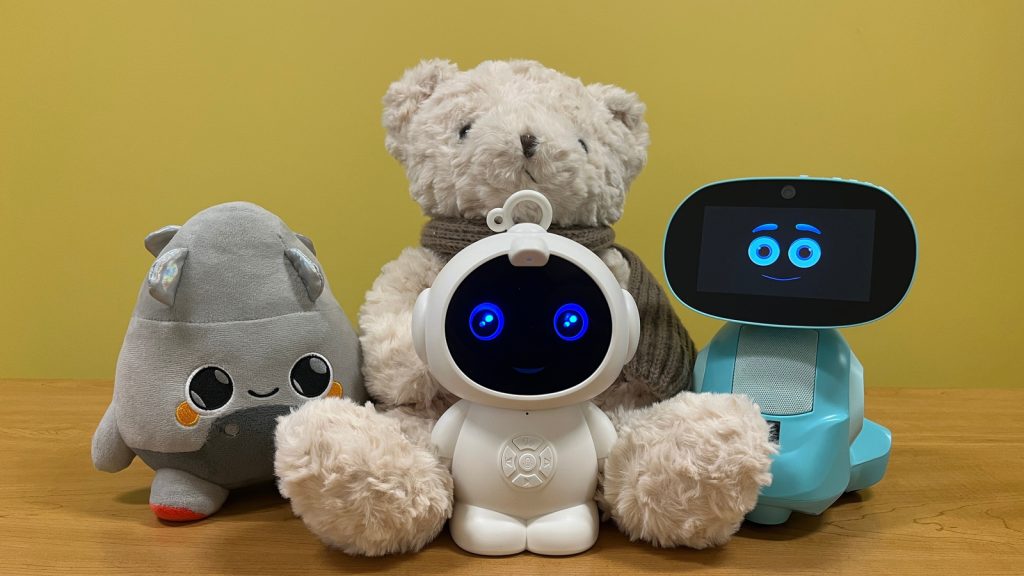
One of the key characteristics of smart toys is interactive feedback. A traditional stuffed animal, for example, may provide comfort through its appearance and tactile qualities. An interactive plush toy can go further by responding to a child’s voice, answering questions, telling stories, singing songs, or reacting to specific interactions. This additional layer of responsiveness can make play feel more dynamic and personalized.
Smart toys are becoming popular partly because children are growing up in an increasingly technology-oriented environment. Interactive digital experiences are already familiar to many children through educational platforms, games, and other devices. Smart toys bring some of these interactive elements into physical play, creating a combination of tangible toys and digital functionality.
Parents are also interested in smart toys because some products are designed with educational purposes in mind. Depending on the design, a smart toy can help children practice vocabulary, learn numbers, explore science concepts, develop problem-solving skills, or engage in creative storytelling. However, the educational value depends heavily on how the toy is designed and used rather than simply whether it contains advanced technology.
Popular Types of Smart Toys and Their Features
The smart toy market includes a wide range of products, from relatively simple interactive toys to advanced AI-powered products. Understanding these categories can help parents select appropriate products and help retailers identify suitable opportunities for their product lines.
AI-Powered Interactive Toys
AI-powered toys represent one of the fastest-developing areas of the smart toy market. These toys can use artificial intelligence to understand or respond to children’s interactions. Instead of following only a fixed sequence of programmed responses, an AI-enabled toy may be capable of generating more varied conversations, answering questions, telling stories, or responding to different prompts.
AI can be incorporated into different types of toys, including plush animals, character toys, robots, and educational products. For example, an AI talking plush toy can combine the emotional appeal of a traditional stuffed animal with voice interaction, creating a more engaging companion for children.
Interactive Plush Toys
Interactive plush toys combine the softness and comfort of traditional stuffed animals with electronic or intelligent functions. They may sing, talk, respond to touch, repeat sounds, answer questions, or interact with children through voice.
This category is particularly interesting because plush toys already have strong emotional and gift appeal. Adding interactive functions can transform a simple character into a more engaging companion while maintaining the familiar physical characteristics of a stuffed animal.
Smart Educational Toys
Smart educational toys are designed to support learning through interactive activities. They may teach letters, numbers, languages, music, science, or problem-solving concepts. Some use voice feedback, sensors, lights, or interactive games to make educational activities more engaging.
The strongest educational smart toys generally combine technology with meaningful learning objectives rather than adding technology simply for novelty. For younger children, simple interactions and age-appropriate educational content are often more useful than overly complicated features.
Smart Robots
Smart robots can respond to voice commands, recognize movement, navigate their surroundings, perform programmed actions, or interact with users. Some are designed primarily for entertainment, while others introduce children to coding, STEM concepts, robotics, and logical thinking.
Robotic toys can be particularly useful for older children because they can provide opportunities to experiment with programming and problem-solving. However, their higher technical complexity can also result in higher prices and greater maintenance requirements.
STEM and Coding Toys
STEM smart toys are designed to introduce children to science, technology, engineering, and mathematics concepts. Programmable robots, electronic construction kits, coding games, and sensor-based toys are common examples.
These products can turn abstract concepts into hands-on activities. Instead of simply reading about programming or engineering, children can interact with physical components and see the results of their decisions.
What Are the Benefits of Smart Toys for Early Education
When designed appropriately, smart toys can provide several benefits for early education. The most important advantage is their ability to make learning interactive and engaging.
Young children often learn effectively through active participation. A toy that responds to a child’s voice, movement, or actions can encourage children to participate rather than simply observe. For example, a talking toy can ask questions and provide responses, turning a simple play session into an interactive learning experience.
Smart toys can also support language and communication development. Interactive talking toys can introduce vocabulary, encourage children to answer questions, practice pronunciation, or participate in simple conversations. For children learning a second language, voice-based interaction can provide additional opportunities to hear and practice words in a playful environment.
Another potential benefit is cognitive development. Educational smart toys can introduce counting, matching, sequencing, memory exercises, puzzles, and problem-solving activities. When these activities are presented through play, children may be more motivated to continue learning and exploring.
Smart toys can also encourage creativity and imaginative play. AI-powered storytelling toys, for example, can help children create stories, develop characters, or explore different scenarios. Rather than providing a fixed story every time, an intelligent toy may offer more varied responses based on the child’s input.
For parents, smart toys can also provide an alternative way to introduce technology through physical, screen-free interaction. Not every smart toy requires a smartphone or tablet. Voice-enabled plush toys and other standalone interactive products can provide intelligent functions while allowing children to interact with a physical object.
What Are the Drawbacks of Smart Toys Parents Should Consider
Despite their advantages, smart toys are not automatically better than traditional toys. Parents should consider several potential drawbacks before making a purchase.
One important concern is privacy and data security. Some connected smart toys may collect voice recordings, user information, or other data to provide their functions. Parents should understand what information a toy collects, where the data is stored, how it is used, and whether the product connects to external services.
Another concern is screen and technology dependence. While many smart toys are designed to encourage physical interaction, some require smartphones, tablets, or companion applications. If children spend too much time interacting with screens or connected devices, the technology may reduce the benefits of hands-on play rather than enhance them.
Age appropriateness is equally important. A product designed for an older child may contain functions that are too complicated for a preschooler, while a toy designed for very young children may not provide enough educational value for an older child. Parents should therefore consider the recommended age range and whether the toy’s functions match the child’s developmental stage.
Finally, technology should not become a substitute for human interaction. Even an advanced AI toy cannot replace the emotional, educational, and social value of interaction between children, parents, teachers, and peers. Smart toys are most valuable when they encourage meaningful play and learning rather than isolate children from real-world relationships.
How to Choose the Right Smart Toys for Kids
Choosing the right smart toy starts with the child’s age, interests, and developmental needs. A good smart toy should provide functions that are appropriate for the child’s current stage rather than simply offering the most advanced technology available.
Parents should first consider what they want the toy to achieve. If the goal is language development, an interactive talking toy may be more appropriate than a programmable robot. If the child is interested in engineering and technology, a coding or robotics toy may provide greater value. For younger children, an interactive plush toy may offer a combination of emotional comfort, storytelling, and simple educational interaction.
Safety should also be a priority. Parents should check the product’s materials, construction, small parts, battery compartment, electronic components, and applicable safety certifications or testing. For younger children, products should be designed to minimize potential hazards and clearly communicate age recommendations.
For connected smart toys, privacy and security features should be carefully reviewed. Parents should understand whether the product requires an app or internet connection and what information may be collected. Choosing products from reputable brands and manufacturers can help reduce unnecessary risks.
Finally, parents should consider whether the smart features actually improve the play experience. A good smart toy should use technology as a tool to support play, creativity, education, or interaction. The technology should have a clear purpose rather than simply being added as a marketing feature.
Weijun Toys: Your Reliable Smart Toy Manufacturer
Weijun Toys is an experienced toy manufacturer offering OEM and ODM solutions for brands, retailers, distributors, and promotional product businesses. With more than 30 years of toy manufacturing experience, Weijun Toys combines traditional toy manufacturing expertise with the development of new interactive and AI-powered toy concepts.
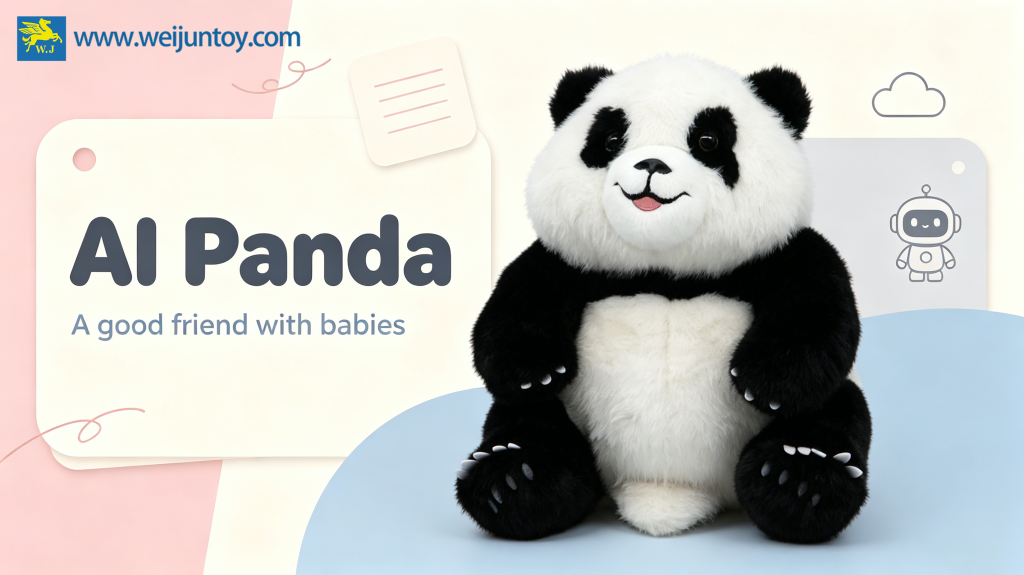
One of Weijun’s self-developed smart toy concepts is an AI Talking Panda, an interactive plush toy designed to combine the warmth and emotional appeal of a stuffed animal with intelligent voice interaction. Instead of being simply a decorative plush toy, the AI Talking Panda can be developed as an interactive companion that responds to users and creates more engaging, screen-free play experiences.
Beyond its own AI Talking Panda concept, Weijun Toys can also develop customized smart toys according to customers’ requirements. Brands can bring their own character concepts, product ideas, functions, or target-market requirements, and Weijun can work with them on the development of customized interactive products.
Customization can cover different aspects of a smart toy, including the character design, plush appearance, size, materials, colors, packaging, voice content, interaction functions, and other product specifications. Depending on the project, customers can develop an original smart character or adapt an existing brand concept into an interactive toy. For third-party intellectual property, the necessary authorization from the IP owner should be obtained before production.
Weijun’s OEM and ODM capabilities allow customers to choose between manufacturing based on their own designs and developing products collaboratively with the manufacturer’s design and engineering teams. This makes it possible to create smart toys for different applications, from children’s educational products and interactive plush toys to promotional products, branded merchandise, and collectible character products.
 2 Modern Factories 30 Years of Toy Manufacturing Expertise 200+ Cutting-Edge Machines Plus 3 Well-Equipped Testing Laboratories 560+ Skilled Workers, Engineers, Designers, and Marketing Professionals One-Stop Customization Solutions Quality Assurance: Able to Pass EN71-1,-2,-3 and More Tests Competitive Prices and On-Time Delivery










